
Lie back and think of England
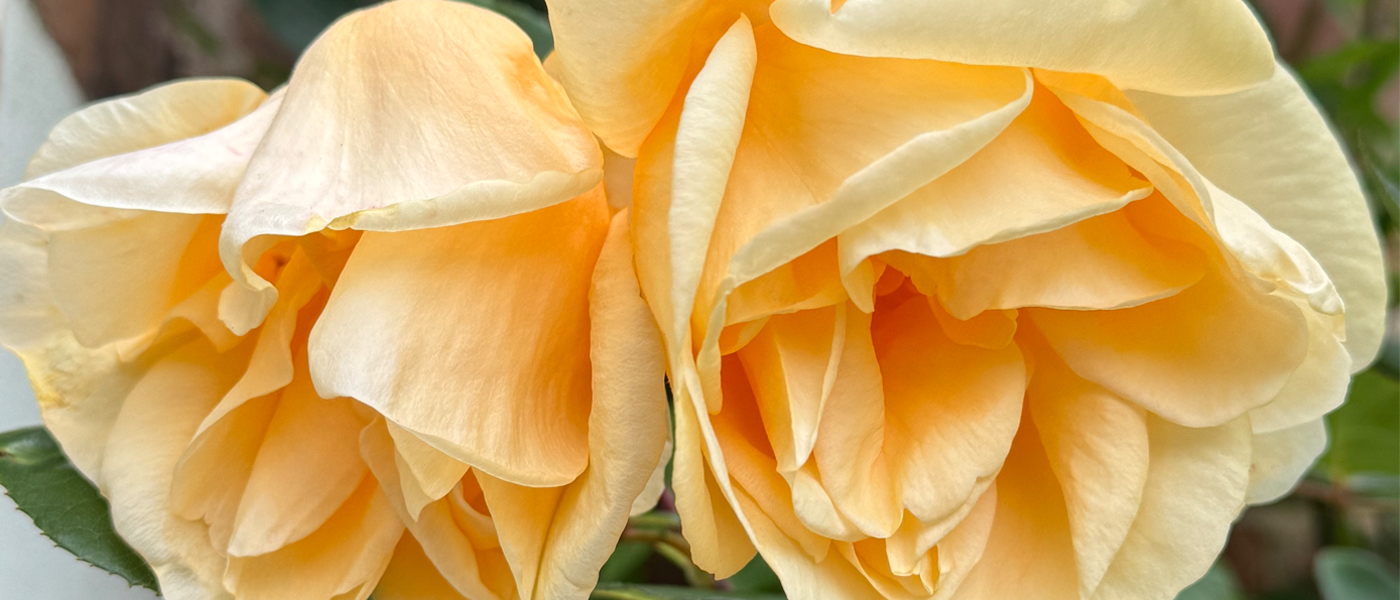
In my garden there is one rose that makes me smile every time I see it. It is ‘Lady Hillingdon’– a lovely faded yellow climbing tea rose released by Elisha Hicks in 1917[1].
The great perfume expert, Robert Calkin, described its scent as “like a freshly opened packet of loose tea”. He is correct. But that is not what makes me grin.

Lie back and think of England
Lady Hillingdon is the woman who coined the phrase “lie back and think of England”. Born Alice Marion Harbord in 1857, she was married to wealthy banker and businessman Charles William Mills, the 2nd Lord Hillingdon.
 She is said to have used the phrase in a diary entry in 1912 to describe her response to her husband’s twice-weekly visits to her bedchamber at their home, Overstrand Hall, in Norfolk. I can find no evidence to prove she wrote this, but the phrase has stuck[2].
In its original context it’s rather sad – an expression of an unhappy marriage. But too many years ago, when I edited the University of Nottingham student newspaper, we had a Geordie sports editor who would often protest: “How can I lie back and think of England when Peter Beardsley’s not in the team?”
For those who are not aficionados of 1980s football, Beardsley was a silky midfielder/striker who won 59 caps for England, scoring nine goals. And for those unfamiliar with the ringing tones of the Geordie accent, try saying with a straight face: “Hoo can A ley back n think of Ing-land when Peeta Beerdzlee znot in the tea-em?”
Eleanor Roosevelt
I once hosted a talk by the distinguished rosarian Michael Marriott at Bromley House Library in Nottingham, where I am a trustee. He had mentioned climbing tea roses and how they can be a bit miserable in this country, but tipped ‘Lady Hillingdon’ as one of the best.
At the end I tentatively told my ‘Peeta Beerdzlee’ joke. The audience tittered enough to encourage Michael to go one step further. He told the story of Eleanor Roosevelt, who had a rose named after her in 1933 – ‘Mrs Franklin D. Roosevelt’.
It seems the First Lady was not so prim as you might imagine. She told friends: “I was very flattered. But I was not pleased to read the description in the catalogue – ‘No good in a bed, but fine up against a wall’”! The audience roared with laughter. I am not the only one with a bawdy sense of humour it seems.

Royal blush
When I told both stories to my friend, Ray Martin, Secretary of the UK Rose Society, it prompted him to confess his embarrassing Princess Anne tale. She was doing a Royal walkabout at the Malvern Show and had stopped at the Society’s stall.
After formally shaking hands, she asked: “How do I stop the roses around my front door just flowering at the top.” “Get your gardener to give your bush a hard prune!” replied Ray.
The Princess looked at him with a smile curling at her lips and a twinkle in her eyes, staring just long enough for Ray to realise what he’d just said and to blush. As she walked away, Ray could hear her roaring with laughter. I can just picture his wife, Pauline, looking up at him and shaking her head in despair.
So now this rose gives me three reasons to laugh. I apologise if I have offended readers, but there is an important point to make here.
History and memory
When I started the storyteller garden, I wanted to create a garden full of plants known in the 19th century that had rich histories. I wanted to unearth those stories and tell them. In the process I found that my frustratingly small garden became full of peep holes into the past that made it feel bigger.
The storyteller garden also soothed my wanderlust. For 20 years, when I was building a business and raising a family, my travels were more limited. I was no longer roaming the world looking for interesting tales to share on the BBC. That didn’t matter. I didn’t have to travel to find stories any more – they were on my back step.
These days I am more relaxed about my planting rules. Something has changed. Yes, I still like old plants with interesting histories. But look! There’s lily of the valley, which reminds me of Grandma (whose name was Lily); iris reminds me of Nanny Stott (she was Iris – clearly a trend going on at the turn of the 20th century when they were born).

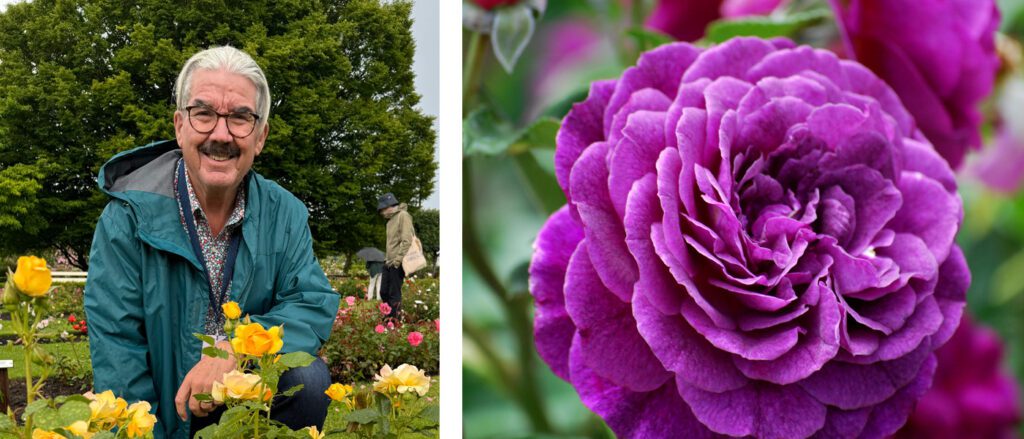
And now there’s the rose, ‘Alaska’, created by my friend, Thomas Proll, the great breeder at Germany’s Kordes roses. Heeled in and waiting to be planted are four roses that Colin Dickson kindly sent me this winter – the last varieties he has bred. His nursery is now closed after over a century in business. Elsewhere is ‘Ebb Tide’, which reminds me of legendary American breeder Tom Carruth, who I met with his partner Rob in Sweden this year.
Gardens as scrapbooks
Gardens don’t just carry their own stories. They can be scrapbooks of our own histories and memories, too. Increasingly I feel compelled to grow plants that remind me of family, friends and my garden adventures.
Soon my daughters may have their own little patches of land to cultivate. I hope they’ll plant some roses to remember their old Dad by. I may need to give them some tips before I go. It can’t be something gaudy, straggly or disease-prone. I want them to step out of their door to a rose so abundant in joyous bloom that they can’t help but smile. Just like I do whenever I see ‘Lady Hillingdon’.
Banner image: Rose ‘Lady Hillingdon’ in full bloom in my garden. Image Martin Stott
[1] The rose is a sport of a shrub-size tea rose bred by the English rosarians Lowe and Shawyer in 1910.
[2] The diary is untraced but the full quote is said to be: “I am happy now that Charles calls on my bedchamber less frequently than of old. As it is, I now endure but two calls a week and when I hear his steps outside my door I lie down on my bed, close my eyes, open my legs, and think of England.” How sad.