
Mistletoe, the birds and kissing
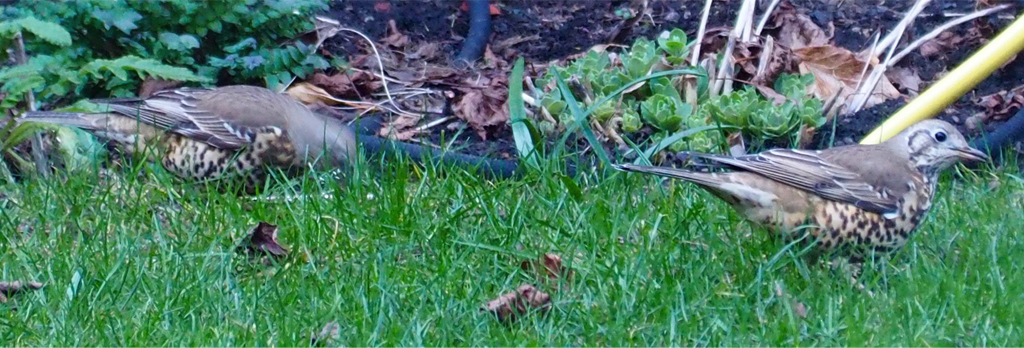
A few winters ago I spotted a turdus viscivorus on my lawn. No, I don’t own a dog. It’s the Latin name for the mistle thrush. But this bird did leave something behind.
I was lucky to welcome this rare visitor. Actually, there were two. He brought his wife along. They hopped around the lawn for a while then flew up to the top of the old apple tree at the end of the garden. Mistle thrushes tend to seek out the highest branches from which to advertise their territory. Their song is exceptionally loud. You can reportedly hear it up to 2km away, especially just after wet and windy weather (which is why some people call it the “stormcock“.
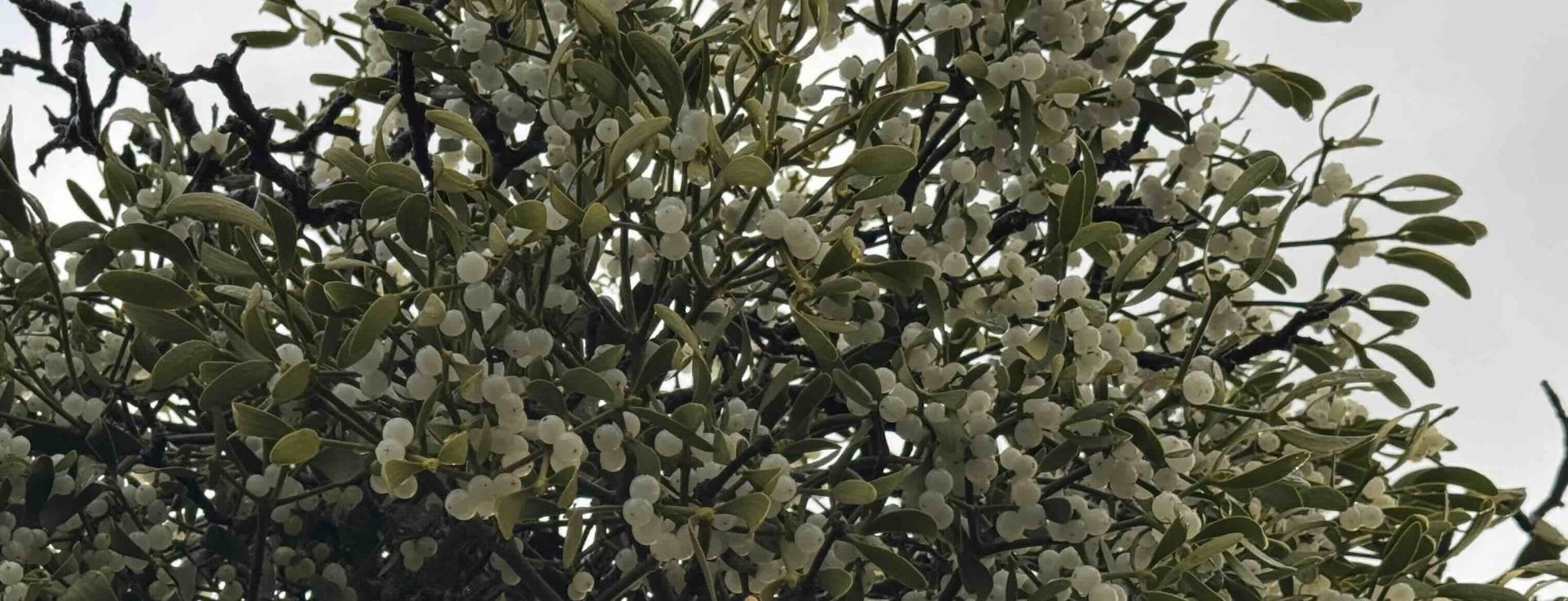
My pair soon hopped off to find a higher perch and I never saw them again, but some time later a bough of mistletoe began growing on the branch from which they’d sung. Was there a connection?
Mistletoe
The mistle thrush enjoys berries and is particularly partial to the fruit of the mistletoe. It is said to defend vigorously any clumps it finds in winter from rivals. Hence the name, ‘mistle thrush’.
The seeds of the mistletoe pass through the bird and are secreted on to the branch. The fruit is sticky and so the bird can also pass it on by wiping its beak on the branch.
Mistletoe is thought of as a parasitic plant that takes its energy from its host, but it is technically a hemiparasite as for some part of its life it does perform a little photosynthesis too. It is most commonly found on apple trees in Britain, though my copy of Deering’s Catalogue suggests that when he was searching it out around Nottingham back in 1738 he also found it on pear, oak and hazel.

Legends associated with the mistletoe go back hundreds of years. In mainland Europe many tie it to New Year and luck. Here in Britain we like to kiss under the mistletoe at Christmas. No-one knows for certain why. Well, they know why. What they haven’t put their finger on is what started the habit. Some say it began in the 18th century. It took off – like many Christmas traditions here – in the 19th century.
Kissing
In his A Book About Roses, written in 1869, Samuel Reynolds Hole shares a poem he wrote in his teens (the late 1830s):
When first I saw the golden curls
Of William Barlow’s youngest sister,
I loved her most of all the girls,
And more and more I sadly miss’d her
There are several verses more in this vein, but let’s cut to the chase:
And it was Christmas-time, you know,
And she was kind, that youngest sister;
And so, beneath the mistletoe,
I offered her my hand – and… “
When I read this line in talks, the audience usually shouts out: “Kissed her!” at the end, which shows you how well rooted the tradition is here.
Vikings
Perhaps because mistletoe is still green in the bleak midwinter it is associated with fertility. Be careful under there! Ancient Scandinavian legends link it to love and friendship – so maybe it actually came over to Britain with the Vikings. Were all those tales of murderous pillage exaggerated? Should, instead, we picture them like Disney characters, jumping out of their longships with their horned helmets and cascading locks, waving sprigs of mistletoe and shouting: “Give us a kiss!”? Perhaps we’ve misjudged them. They only wanted some Anglo Saxon affection! The number of us with Scandinavian genes suggests they found it. Certainly many settled here, building homesteads.

Medicinal uses
Mistletoe may have some romantic benefits. But it is thought to have medicinal ones too. Deering recommended it for the “Falling Sickness” (an old term for epilepsy)…
“As also the Swimming of the Head, nay even Apoplexy. The Power of the Leaves and Bark is used for these Purposes. For my part I must confess that I have seen some good effects from it in convulsions and vertigoes.”
– Charles Deering, A catalogue of plants naturally growing and commonly cultivated in divers parts of England, more especially about Nottingham 1738
Today there are unproven hypotheses about its merits as a cancer therapy and in treating blood pressure. But be careful because it’s poisonous in its raw state. You may find it causing those convulsions Deering treated with it. That’s if you can pick it. There’s an additional danger to be considered here. If it’s as high in your garden as it is in mine, you risk breaking your neck to harvest it.
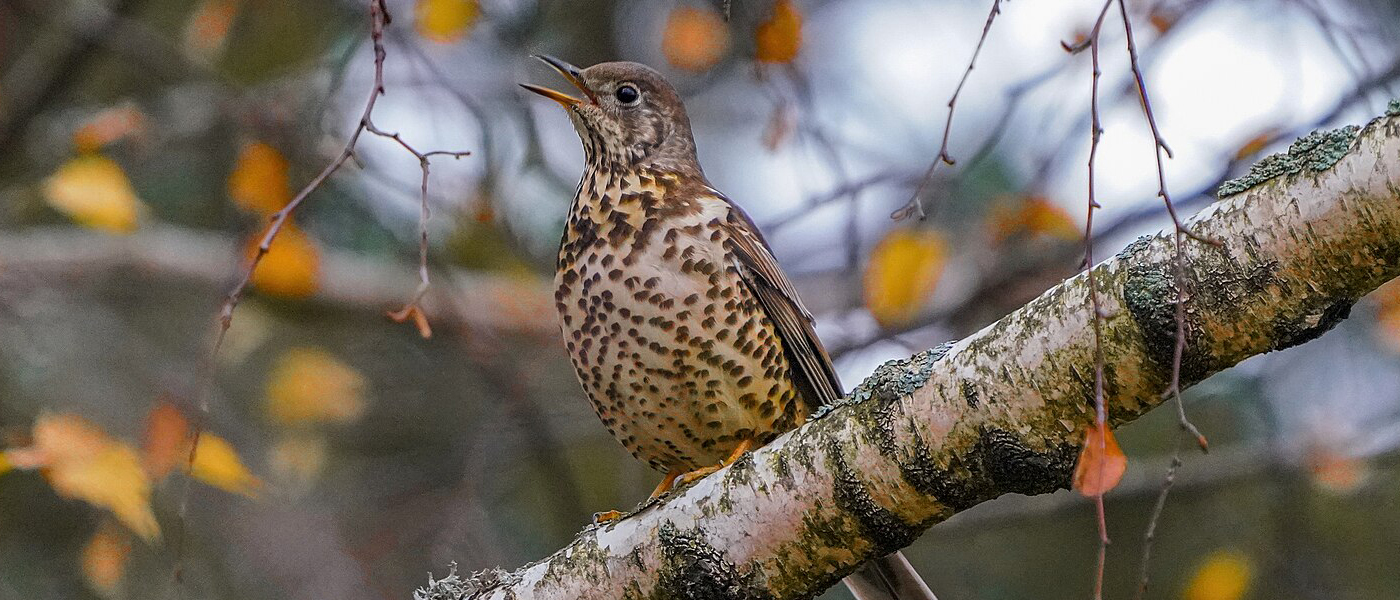
Giles Laurent, CC BY-SA 4.0