How do roses get their names?
‘A rose by any other name would smell as sweet,’ said Shakespeare. But would anyone buy it? Rose names can be controversial and emotive! The right or wrong name can make a big difference to sales.
Back in the 19th century breeders seemed to name roses after people. They might be rich customers, like ‘Mme Alfred Carrière’ (wife of a Grenoble concrete pipe manufacturer) or ‘Mme Isaac Pereire’ (wife of a Parisian banker). Or loved ones – ‘Mme Hardy’ was the wife of the rose’s breeder. Not all names worked. How about this rose from 1922, ‘Baronesse M. van Tuyll van Serooskerken’? Or, from 1923, ‘Mevrouw G. de Jonge van Zwynsbergen? No. I’m not surprised they never survived either.
 Celebration roses
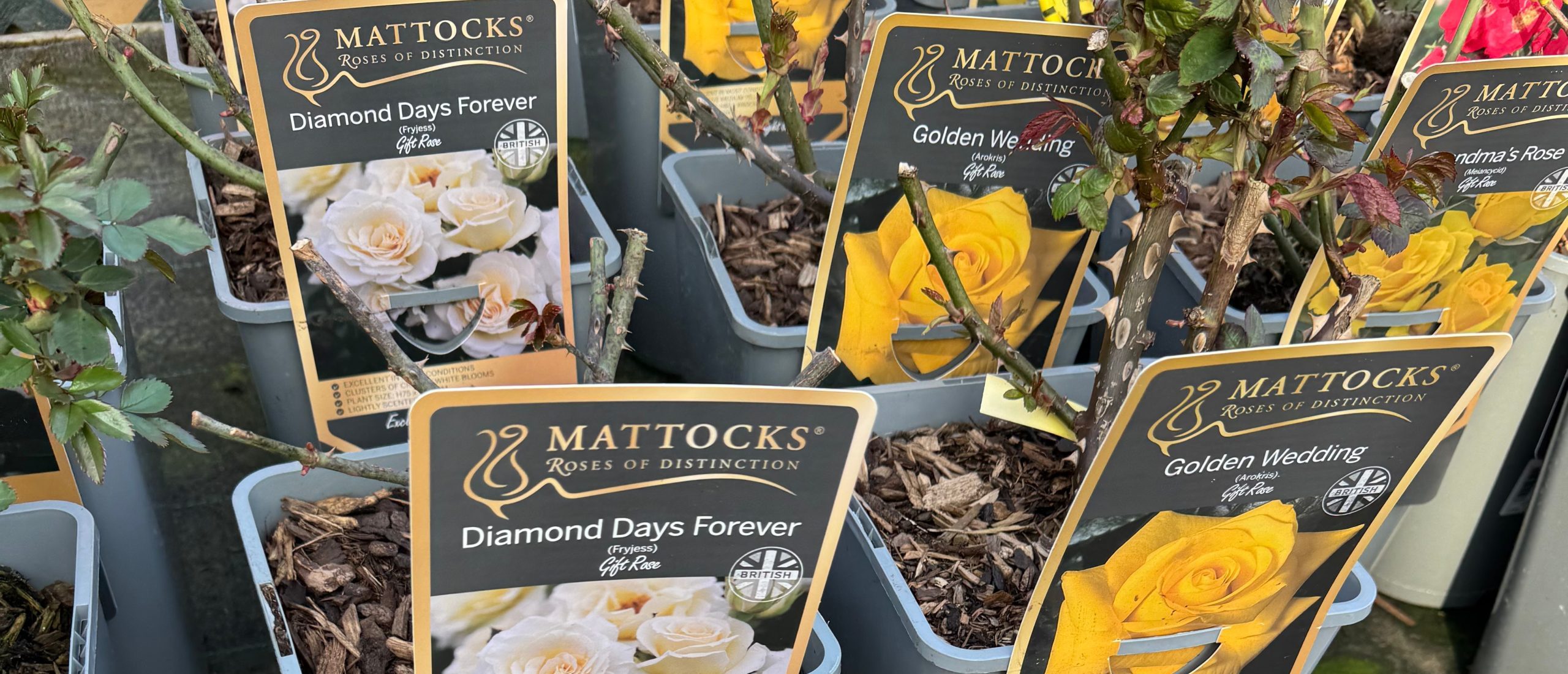
Stand in front of the rose section of almost any garden centre today and the chances are that more than half of them will be what the industry calls ‘Celebration’ roses. They’ll have rose names like ‘Silver Anniversary’, ‘Birthday Girl’, ‘Diamond Dad’ or ‘Grandma’s Rose’. All designed for the gift market.
The roots of the ‘Celebration’ naming craze probably lie in the ‘Peace’ rose. This was a promising new rose smuggled out of France in 1939 on the eve of the German invasion. Breeder Francis Meilland sent budwood to his agent, Robert Pyle, in the US, who immediately recognised how special it was.

‘Peace’
When he launched it in France in 1942, Meilland originally called it ‘Mme A. Meilland’, after his mother. In Italy it was called ‘Joia’ (joy). But savvy Pyle rechristened it ‘Peace’ for the American market. The date of its launch – with the release of two symbolic doves – coincided with the fall of Berlin. A couple of months later when the 49 delegates to the first session of the new United Nations met in San Francisco, Pyle ensured each had a ‘Peace’ rose in their hotel room. It included a card from the American Rose Society, reading:
“This is the Peace rose, christened in Pasadena on the day Berlin fell. We hope the Peace rose will influence men’s thoughts for everlasting world peace.”
It was a great rose name. It was also a great rose. ‘Peace’ appears in the bloodlines of nearly all modern roses because of its health and beauty. Strangely, it was not the first ‘Peace’ rose.
Lost in translation
The English breeder Joseph Pemberton launched ‘Pax’ at the end of the First World War. Suffice to say it did not have the same success. Perhaps Pemberton’s customers had insufficient understanding of Latin to realise what its name stood for!

Naming a rose is not easy. I was asked recently why roses are often be sold under three or four different names in different parts of the world. Sometimes it is to avoid local copyright infringements, or because the original name does not travel well. The most famous rose from the great German breeders, Kordes, is ‘Schneewittchen’ – it means Snow White. I am not sure if Disney had a copyright claim on the English translation of Schneewittchen but here in the UK and in the US we know it by another name: ‘Iceberg’.
Usually the distributor in each country has a strong say on how the rose will be christened there. Poulsen in Denmark in 1996, bred a beautifully scented rose they called ‘Ghita Renaissance’. Its first UK distributor, Cants, called it ‘Millie’. But a year on when the UK’s biggest rose grower took on distribution they gave it its current UK name, ‘Mum in a million.’ I prefer ‘Millie’, but my livelihood doesn’t depend on sales!
When a rose name become embarrassing
Many roses today are named after celebrities. This is great if they are internationally famous. Not so good if they’re a Danish actor barely known outside their country. Nor so great if that person does something embarrassing. ‘Duchess of York’, introduced by the famous Irish rose breeder Colin Dickson in 1992 had to be quickly rechristened after compromising paparazzi pictures were splashed over the tabloids of the once-popular Royal on a sunbed in her garden with someone who wasn’t husband Prince Andrew. That she and Andrew had announced their separation five months earlier seemed irrelevant to tabloid editors who were obviously sensitive souls in those days. (Whether the new name given by the distribution agents – ‘Sunseeker’ – was tongue in cheek is unknown.)
In 2022 David Austin Roses had to rename ‘Mortimer Sackler’ (a great rose by the way). Mortimer’s wife is said to have bought naming rights to the rose in a charity auction. It later became clear that the American philanthropic family’s money had come from Purdue Pharma – a company associated with fuelling America’s addiction to opioids. It is now ‘Mary Delany’ – after a genteel 18th century artist who made lovely paper-cut collage pictures. You can’t get any safer than that!
None of this explains why I get so stroppy at the garden centre when I hear someone say: “Ooh, it’s their 50th wedding anniversary. Let’s get them this ‘Golden Wedding’ rose.”
It’s the thought that counts
I have spent more time than I should trying to understand this irritation. Here’s my conclusion. When making a gift, it’s the thought that counts. And buying a rose requires a lot of thought. Where will it be planted? How much sun will it get? Do you need a climber, shrub or ground cover? Which colour will work best? What shape bloom do you like? What does it smell like? And how healthy is it? The rose name should be the last factor in any decision.

Of course, I recognise that hardly any roses would be sold in garden centres if we forced everyone to go through this process. So, I’m not sure this is a strong or fair argument!
My second issue is that many ‘Celebration’ roses are roses from the 70s and 80s. The growers no longer need to pay a licence fee to the breeder (UK plant patents expire after 25 years). It means they can sell them cheaply or make more profit. But roses bred in those days were drenched in fungicides from birth.
Today most rose breeders avoid using chemicals as much as possible. They test them in trials grounds around the world under a vast range of conditions. They are looking for roses that are genetically resilient – that will survive in your garden with as little treatment as possible.
Patent names
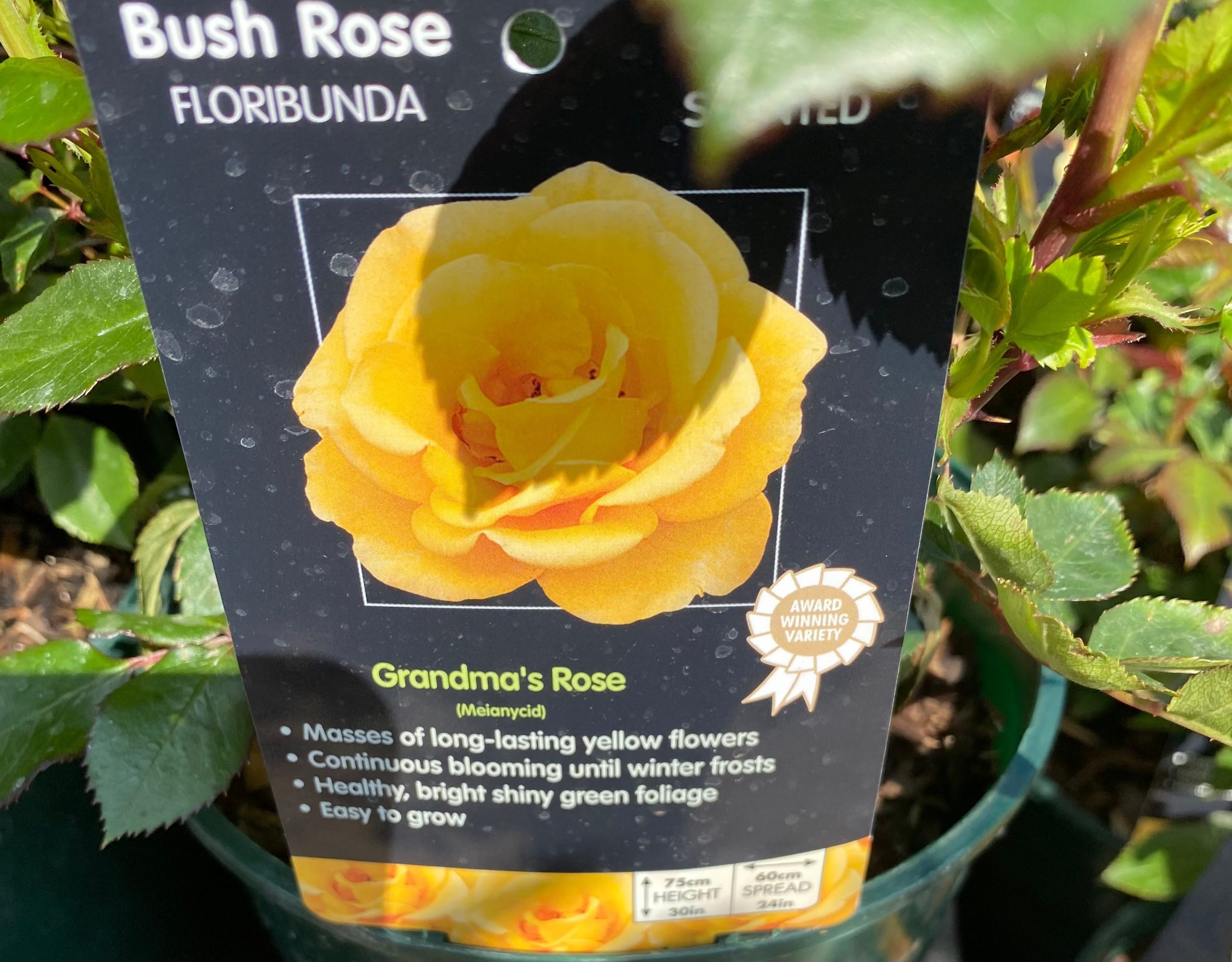
At least it is easy to tell if a rose is modern. It will usually have a patent name on the label under the main name. So, for instance, the initials CHEW in the patent name stand for Chris Warner – one of the UK’s greatest breeders and a stickler for healthy plants.

This is not to say that all ‘Celebration’ roses are poor. On the contrary. Many are very good. The breeders know that finding a good rose name will help it sell. They’re not stupid. But here’s my final problem. They might be great roses, but what if I’m not a ‘blushing bride’, a ‘mum in a million’ or a ‘birthday girl’?
The name should be the last consideration when purchasing a rose. But it might be the first in putting you off!