
Ellen Willmott and the Genus Rosa
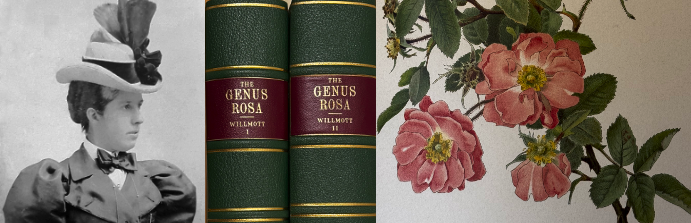
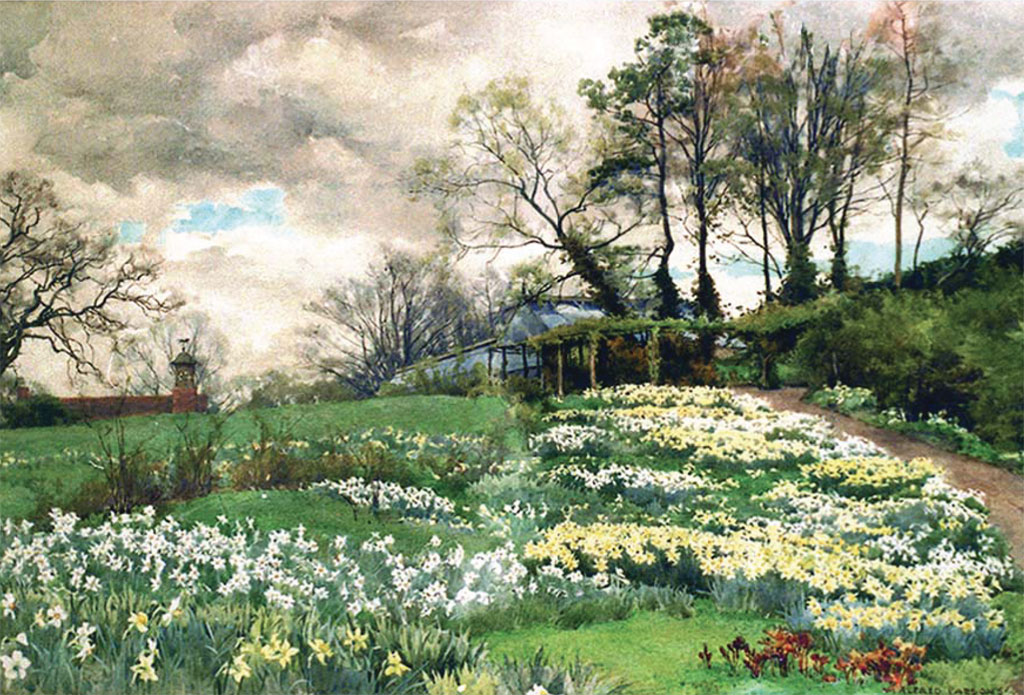
Aix-les-Bains in the second half of the 19th century was the place in Europe for the aristocracy to “take the waters”. It was here, in 1889, that Ellen Willmott, suffering crippling back pain, went for treatment. And here she met an artist who was to play a part in the story of her later downfall.
Ellen Willmott, then 31, was an extraordinary woman with extraordinary wealth. The daughter of a successful lawyer, her godmother was Countess Helen Tasker. Each year the childless Lady Tasker would give Ellen a very simple birthday present – a cheque for £1,000. In today’s money, that’s the equivalent of over £100,000. When the countess died in 1888, she left Ellen and her sisters each £140,000 – the equivalent of about £16 million today. She later inherited substantial wealth from her parents, too.
Extravagence
But Ellen was a woman with expensive tastes, raised with little concept of budgeting. At the time she first met Alfred Parsons, money was no problem. It was to become one.

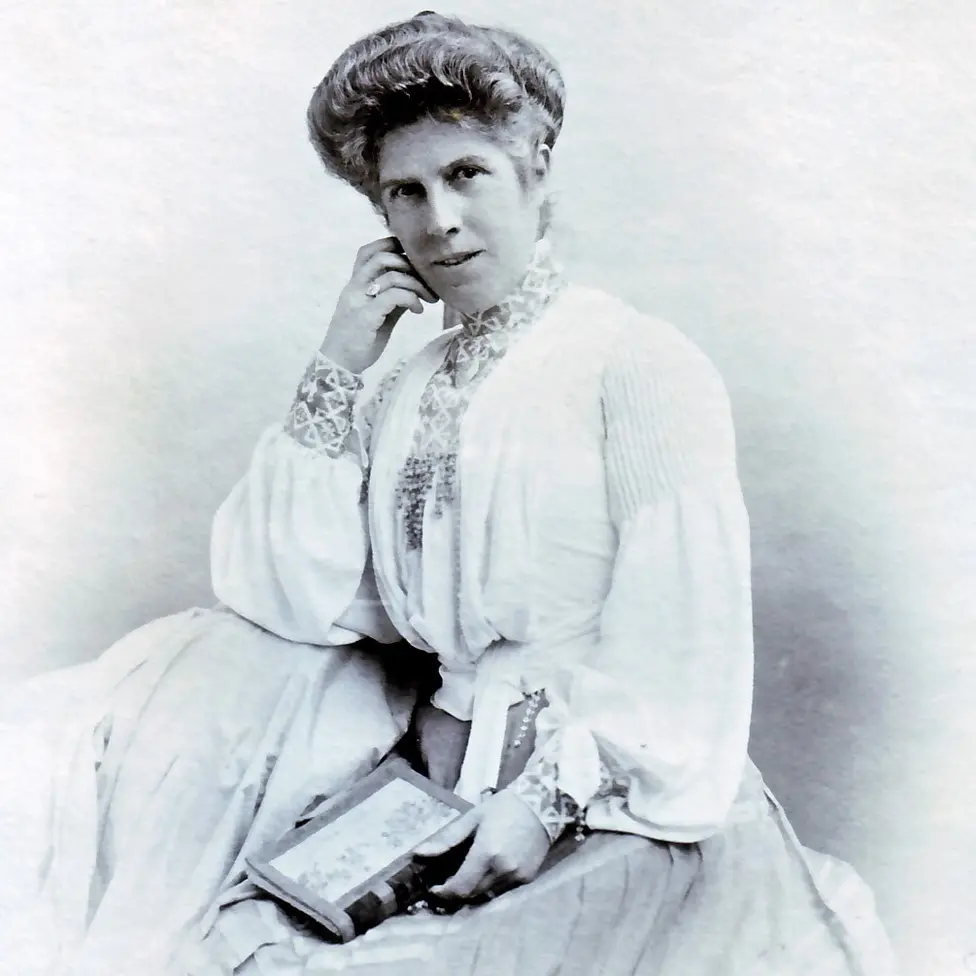
In 1889 Parsons was already a successful artist. He’d just won both gold and silver at that year’s Paris Exhibition. Ellen, a mad keen gardener, probably knew him for his stunning engravings in William Robinson’s famous book The Wild Garden, published just a few years earlier.

Maybe it was then that the seed of an idea was sown. We know she owned a rare copy of Les Roses – produced by the renowned Belgian artist Pierre-Joseph Redouté. He had been commissioned by the Empress Josephine to paint the roses in her garden at Malmaison – a work he completed between 1817 and 1824. Botanist Antoine-Claude Thory provided accompanying text, describing the genus and variety of all the roses contained in the work. Could she and Parsons produce a new version? Could he be Redouté to her Thory? Or even to her Josephine? For she could provide not just the text, but also the gardens.
Warley Place
The year after that meeting in Aix-les-Bains, Ellen bought Chateau Tresserve nearby, and later another property, La Boccanegra in Ventimiglia, Italy. But her main residence was Warley Place in Essex – the home her father had bought when she was just 17. He’d died in 1892, her mother in 1898, at which point Ellen became the sole occupant.
She’d already had an influence on the grounds, when at the age of 23 she started a new alpine garden. For most of us this would mean knocking together a little rockery. For Ellen it meant building a three-acre ravine with rock hewn and carried 200 miles from Yorkshire. A stream ran alongside and it included a cave for her ferns.

If she could do that with her parents watching on, imagine her unleashed! After their death she transformed the grounds – 90 acres – into one of the most celebrated gardens in England, employing over 100 gardeners and including over 100,000 plants collected from around the world. She was a plantswoman extraordinaire – later awarded the Victoria Medal of Honour by the RHS and one of the first women to become a fellow of Linnean Society. She is widely recognised for her expertise in roses, daffodils and several other species. Over 60 plants are named after her or Warley Place.

Parsons commission
It’s not clear when she commissioned Parsons to start painting her roses at Warley and Tresserve, but in 1905 she showed 30 of them to the Linnean Society. She commissioned him to produce 140 in all. Supported by leading international horticulturalists of the time, she began writing up the text.

But the spending was catching up. She’d promised to help fund a plant hunting expedition to China by Ernest Wilson and was struggling to raise the cash. Parsons was sending her reminders over payments. Somehow it was beyond her to start cutting costs and to stop buying plants. In 1907 she borrowed £15,000 from two senior partners at her father’s old law firm, using her estate as security. That same year a fire devastated Tresserve. It was uninsured.
Genus Rosa was her grandest passion project, but perhaps she also saw it as a route to financial recovery. She estimated it would make her £13,860 (the equivalent of around £1.5m today) – less publisher commission. But then getting it to print dragged on. Her relationship with Parsons became strained – the artist, now approaching 60, tired of being summoned to her gardens to paint a rose suddenly in bloom. They quarrelled over how it was to be printed. Self-taught Ellen procrastinated over the text, perhaps overwhelmed by the challenge.
Final publication
It was eventually decided the work would come out in in 24 parts, to be bound in two huge volumes – an “elephantine monograph”, according to one writer. And that’s a fitting description. I have a copy. Each volume is 15″x11″ and 3″ deep. I haven’t a book shelf deep enough for them. Together they come in at 26lb on the scales! But it wasn’t the size and weight that was the problem for buyers. It was the cost. We’re talking about £2,500 in today’s terms.

The first part was finally published in December 1910. In all Genus Rosa has 132 colour chromolithograph plates. The production costs were eyewatering – over half a million pounds in today’s money (of which she paid around £150,000, publisher John Murray the rest).
It has been described as the “the first great colour-printed book of the 20th century.” But few recognised that at the time.
Ellen, desperate to sell copies, sent them to friends far and wide. Some sent them back when they saw how much it was going to cost. Bookshops couldn’t afford to hold copies. Piecemeal publication over three and a half years meant reviews dragged on – even in the early 20th century you needed momentum as you do in today’s social media age. Of 1,000 copies printed only 260 had been sold by 1920. Ellen began giving copies away. Her irate publisher wrote asking for them back as they tussled over who owned the unsold volumes.
Criticism
Today, copies of the book occasionally come up for auction at places like Sothebys and Christies. I bought mine from the US and had it rebound, with fresh archival quality tissue put between the plates. Modern commentators criticise the writing. Here’s the famous rose breeder, Jack Harkness: “Miss Willmott’s text is rich in old lore, which she records without committing herself to its factual exactitude.”
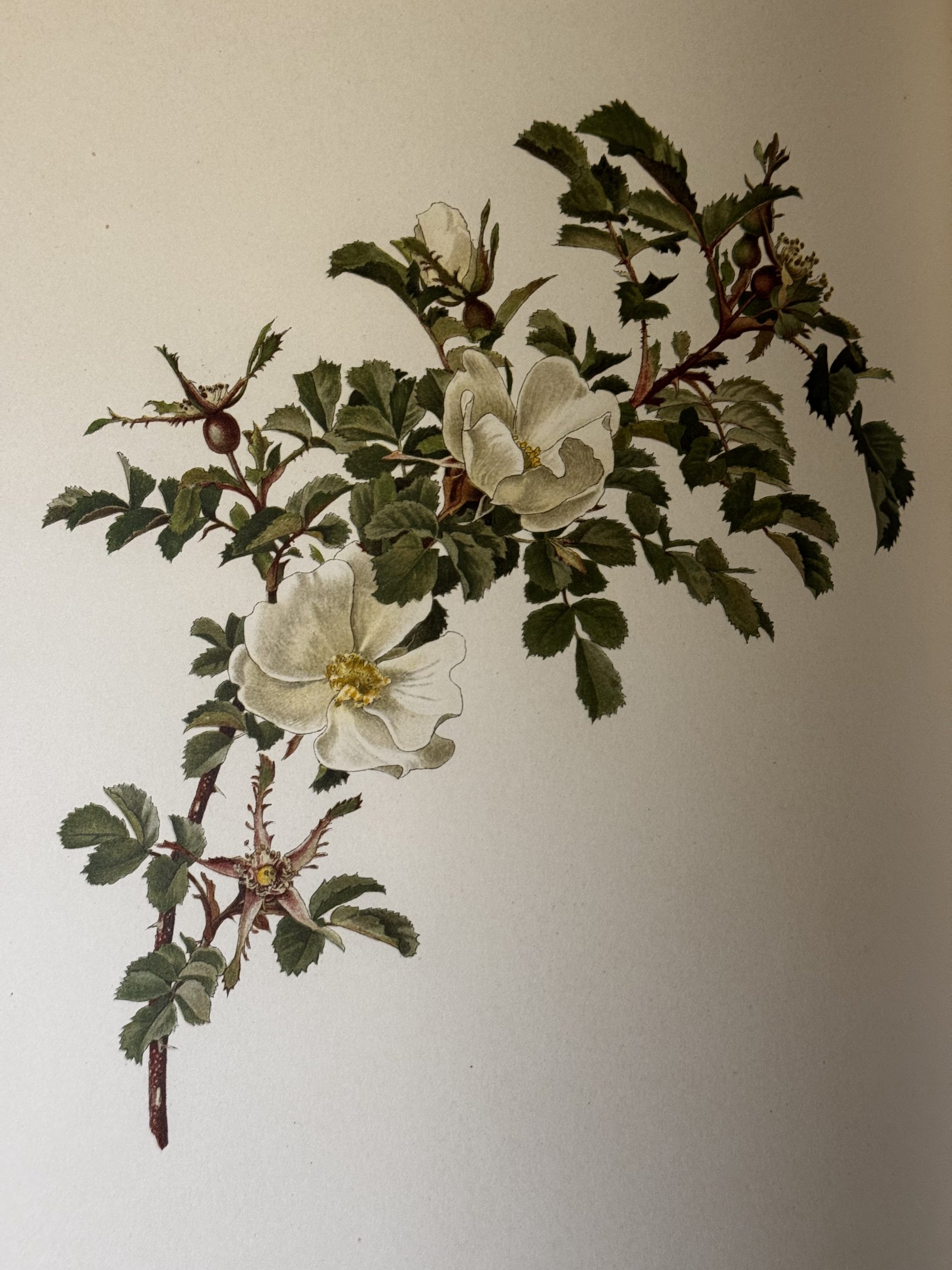
The printing is criticised, too. Ellen’s own volume with the original paintings alongside the printed plates is in the RHS Lindley Library. “A comparison of these with the chromolithographs shows how terribly the former have suffered in reproduction,” according to Blunt and Stearn[1]. They continue: “A buff tint pervades the plates; the freshness of the pinks and the coolness of the greens are wholly lost.”
It seems harsh. The paper is tinted at the edges, but the paintings look good to me. I have yet to see the originals. Parson’s “delicate and charming” paintings are still recognised and admired, though. They are a thing of beauty as you can see here.

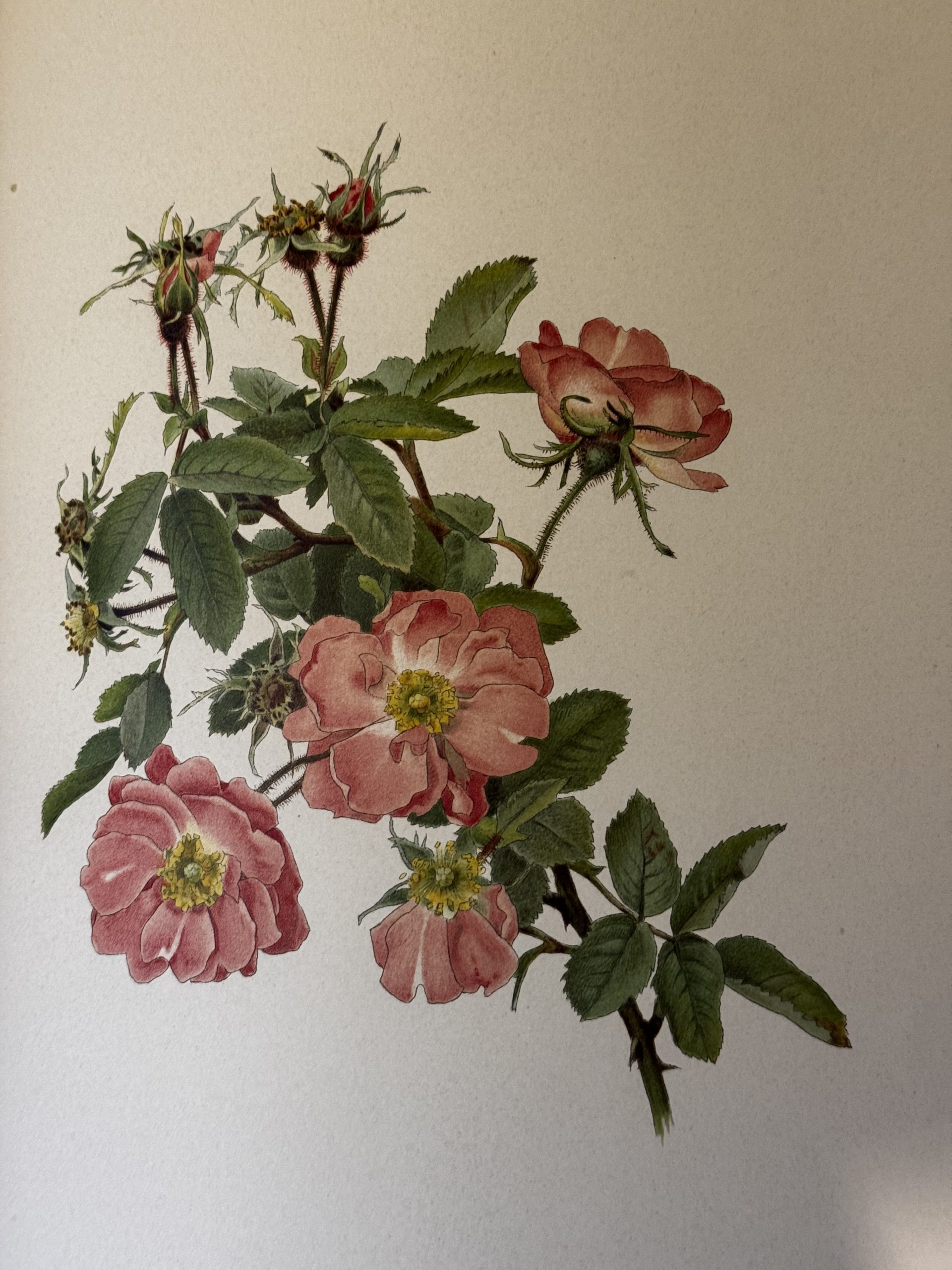
In the end, the publication that might have rescued Ellen Willmott’s finances only added to her woes. She had to sell her overseas properties and her valuable musical instruments and jewellery. Gardeners were laid off. She clung on at Warley Place – though much of her planting was destroyed by soldiers camped on the estate during the First World War.
Deterioration
Her life disintegrated. She became seen as a curmudgeonly eccentric. She’d carry a pistol in her handbag and seeds of the sea holly, Eryngium giganteum, in her pocket. She became famous for visiting gardens and sowing them in the beds. When they sprouted the following year, they became known as “Miss Willmott’s ghosts”.
Ellen Willmott died alone at Warley Place on 26 September 1934. After her death the house and her belongings were auctioned to help pay off her debts. A developer produced plans to turn it into a housing estate but the Second World War intervened. The house was demolished in 1939.

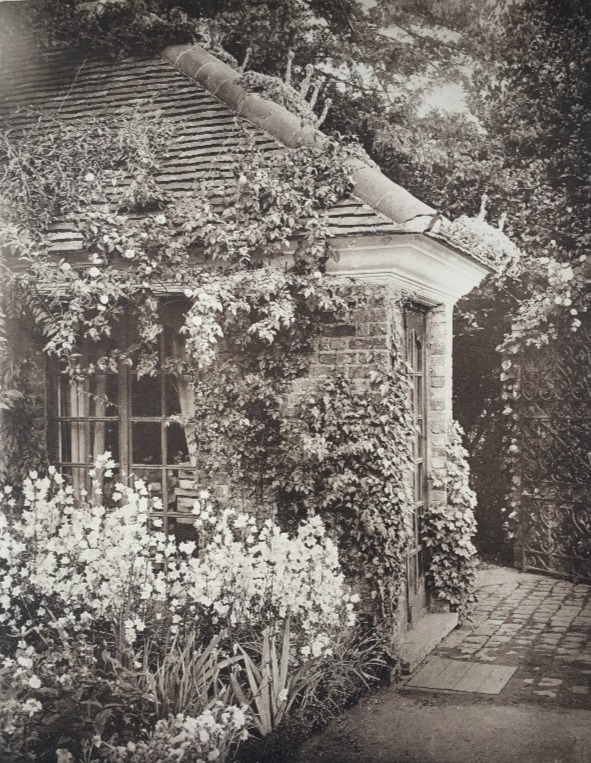

Today
Today the estate is a nature reserve. The ruins of the house and gardens can be seen, covered in decades of undergrowth. It sounds depressing, but visit in spring and you will see it alight with snowdrops and daffodils that have multiplied and spread from her original precious collection.
These, and the rare remaining copies of Genus Rosa, are Miss Willmott’s ghosts today – a poignant reminder of a remarkable woman who must have been impossibly frustrating to work with, but one of the finest plantswomen of her generation. Let’s leave the last words to Gertrude Jeckyll, who was a good friend of Ellen’s. She described her as: “The greatest of living women gardeners.”
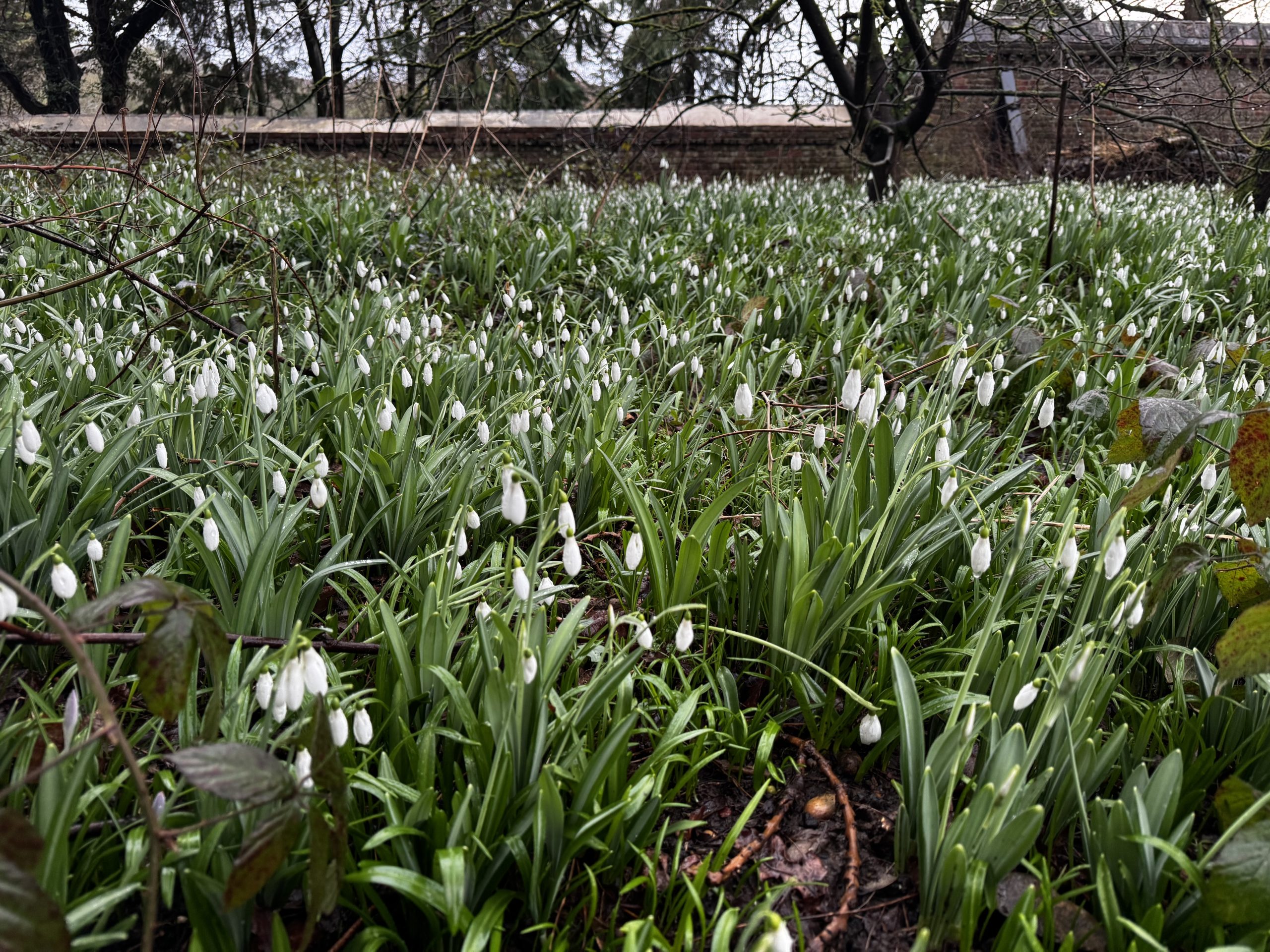
For the full story of Ellen Willmott, get a copy of Sandra Lawrence’s outstanding book, Miss Willmott’s Ghosts. A great read!
[1] The Art of Botanical Illustration, Wilfrid Blunt and William T. Stearn.