
Irish daffodil mania and a forgotten artist
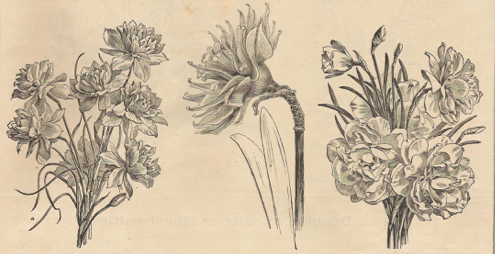
In the 19th century, before colour printing and photography became established, publications would often be illustrated with beautiful engravings. Reading my old copies of the Gardeners’ Chronicle I often pause just to enjoy them. And that’s how I discovered the story of Ireland’s ‘daffodil mania’ and a forgotten woman artist.
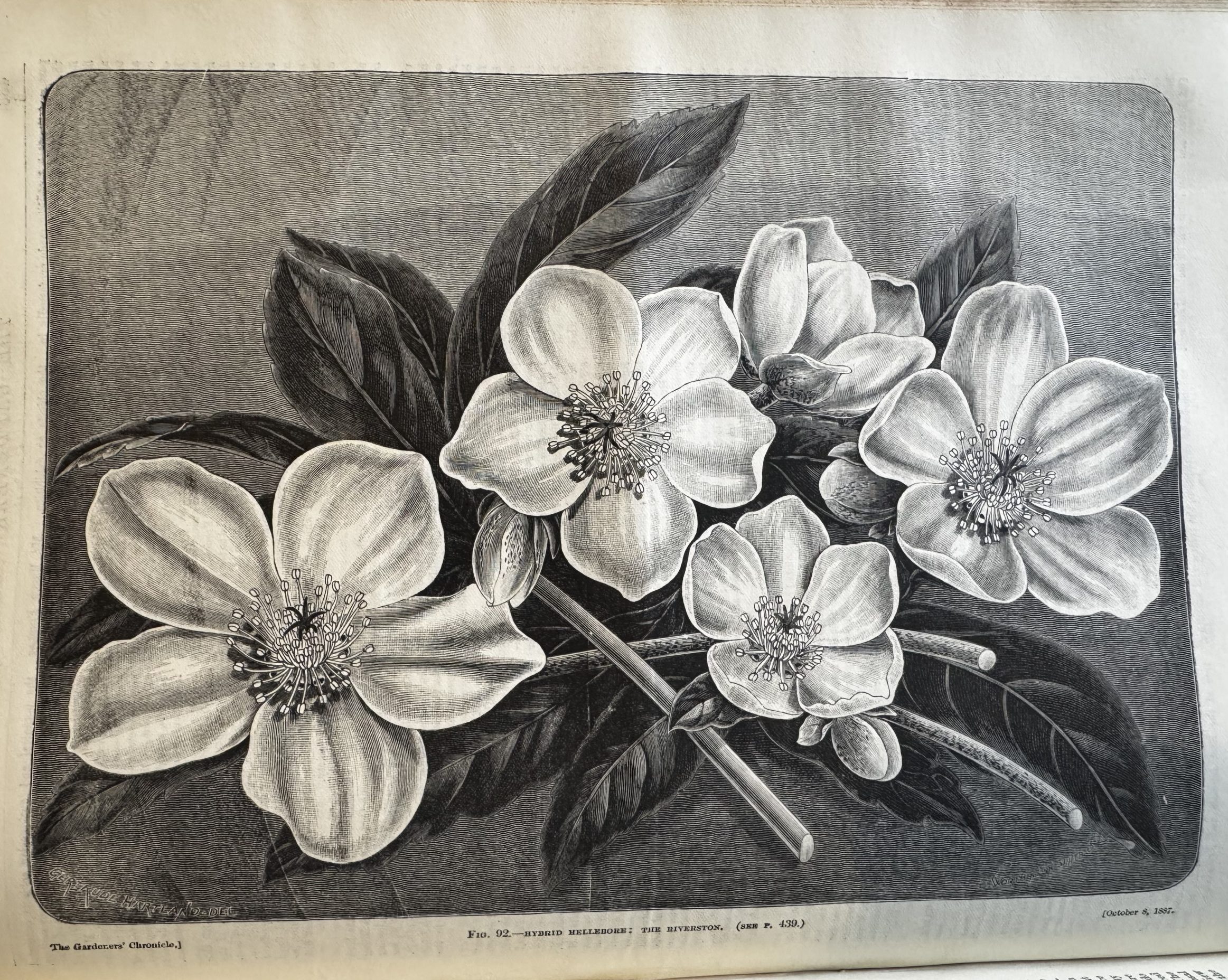
It was this picture of hellebores in the October 8th 1887 edition that set me on this journey of discovery. It takes a full page, and you have to turn the publication physically on its side to truly appreciate it. I bet many did. Look carefully in the bottom left corner and you can see the name of the artist – Gertrude Hartland.
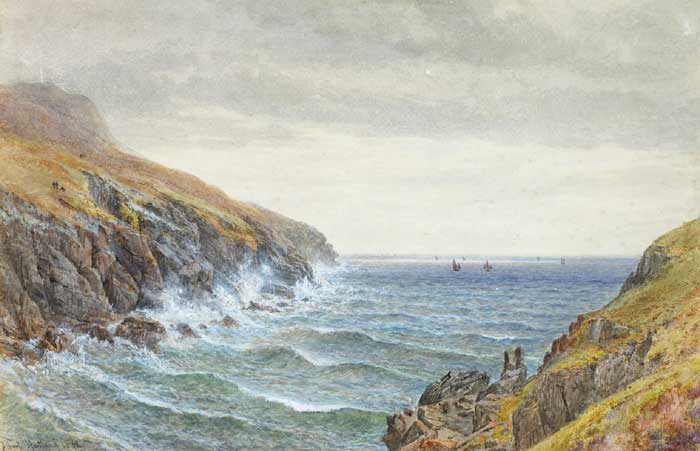
Gertrude was born in County Cork in 1865. She had two influential uncles. The first, Henry Albert Hartland (1849-1893), was a distinguished artist whose work was exhibited at the Royal Academy in London. He specialised in landscapes and seascapes. It sounds like the latter were his downfall… quite literally. In 1893 he died in Liverpool after falling off a cliff.
The Daffodil King
If Henry inspired his niece with his talent, Uncle William Baylor Hartland (1836-1912) encouraged and – perhaps – exploited it. Willam was a nurseryman who specialised in bulbs. His grandfather had been a gardener at Kew and, after a spell working for the Earl of Kingston at Mitchelstown in County Cork had established a nursery 20 miles to the west of there in 1787.
In time William inherited the business and moved it to the southern Irish coast at Ballintemple, Co. Cork – and built a 10-acre estate there. Frosts were rare on the south coast and the flowers bloomed early, enabling William to ship them to Covent Garden in London before the English daffodils were available. He supplied Queen Victoria, too. When his fields were in flower they were a “feast”, according to one writer in The Garden magazine.
“To see the masses of the rarest varieties in such luxuriance and health was a sight not elsewhere to be met with…”
Irish daffodils
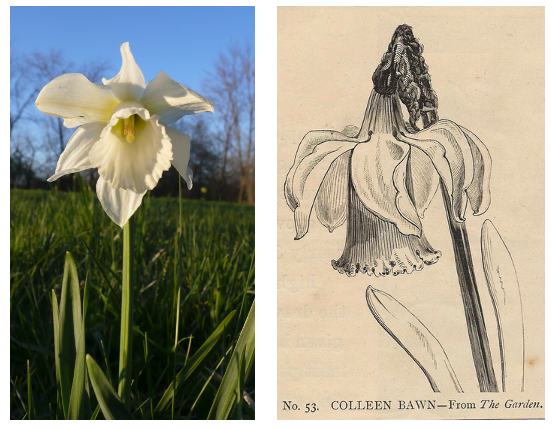
Daffodils are not native to Ireland but the humid climate suited them. Over many years daffodils planted in cottage gardens in southern Ireland had self-hybridised and Hartland had come to recognise this unique resource. He went hunting through these gardens for unique blooms, introducing them to customers with names like ‘Little Nell’, ‘White Minor’ and ‘ Colleen Bawn’. The American daffodil bible, daffseek.org, attributes over 100 to him.
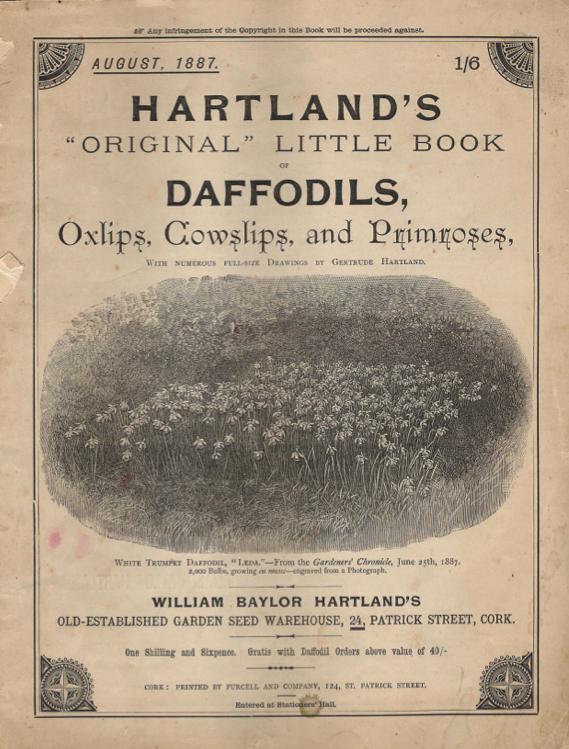
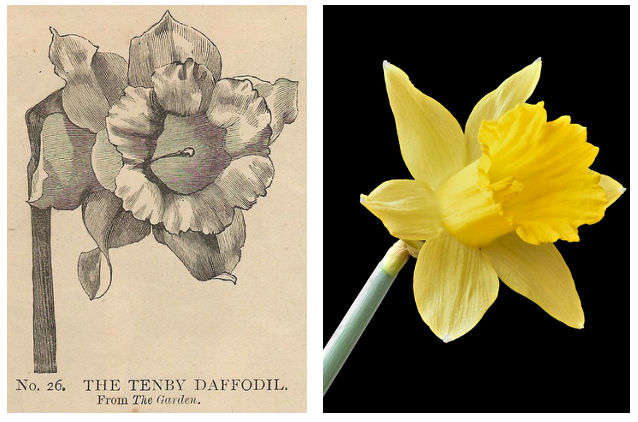
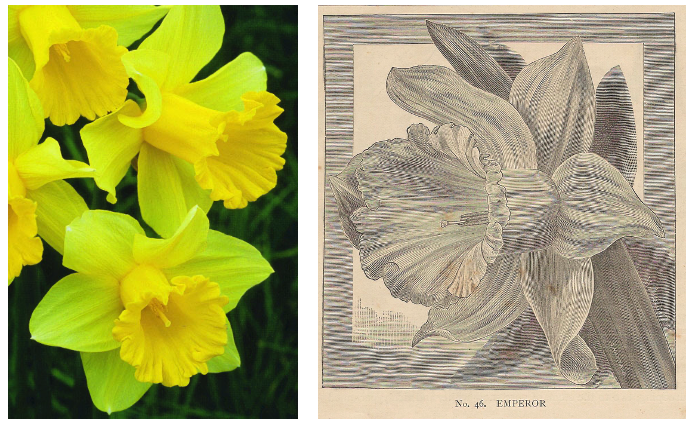
William was a savvy salesman. He boasted that he was taking on the Dutch bulb industry and described his bulb farm as “Haarlem in South Cork”[1]. In 1884 he commissioned his talented niece to draw the daffodils and other bulbs he sold. He paid £150 to W. J. Welch of London – who worked on the Gardeners’ Chronicle – to turn her stunning drawings into engravings. He then published a 32-page catalogue, Hartland’s “original” little book of Daffodils, Oxlips, Cowslips, and Primroses – with numerous full-size drawings by Gertrude Hartland.
Clamour
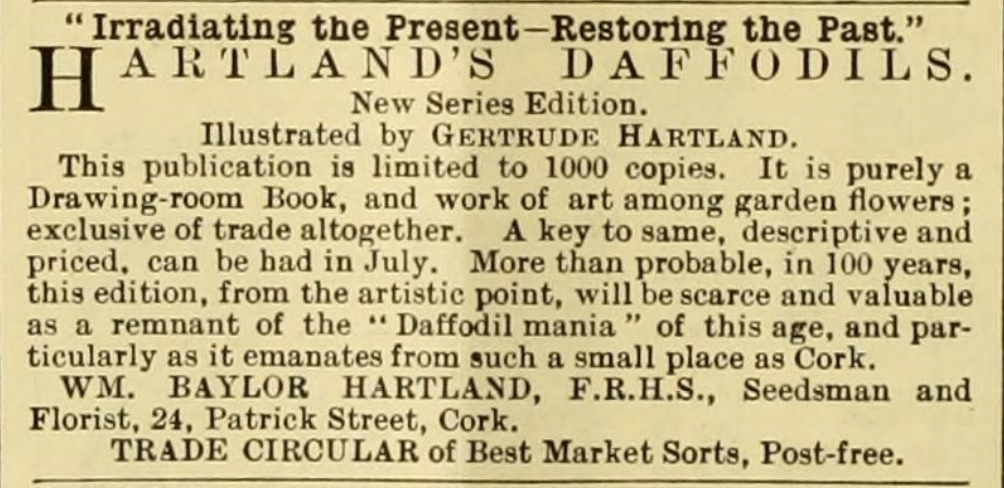
If his fields were a feast, this was the amuse bouche, meant to whet the appetites of potential customers. Hartland sold the catalogue for one shilling and sixpence – or packaged it free with orders above the value of 40 shillings. He updated it in successive years, claiming in adverts that:
“More than probably, in 100 years, this edition, from the artistic point, will be scarce and valuable as a remnant of the “daffodil mania” of this age, and particularly as it emanates from such a small place as Cork.”
In 1897 William produced a special jubilee issue of the publication with limited numbers that included hand-coloured copies for one guinea a piece. Oh, to see one of those!
Gardeners’ Chronicle
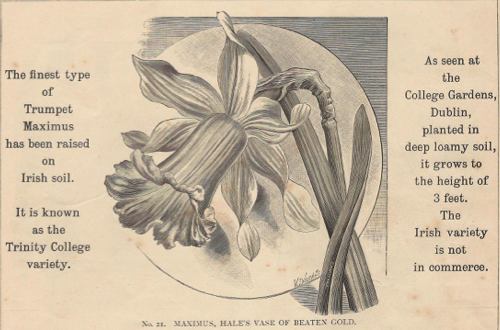
Hartland no doubt sent the editor of the Gardeners’ Chronicle a copy. It reproduced Gertrude’s picture of the daffodil, Árd-Righ, in March 1887. Other images she produced appeared in The Garden. And, of course, he took out adverts. The coverage he generated in the gardening press meant soon gardeners in England were clamouring for his bulbs.

Few Hartland daffodils are commercially available today – you can buy ‘Colleen Bawn’ and ‘Rip Van Winkle’ in the US, and UK heritage bulb supplier Thomas Etty sells the astonishing ‘Rip Van Winkle’, attributing it to Hartland (details below). But some of those other daffodils Gertrude drew can also be bought.
Promiscuity
Drew McFarland is an American who specialises in growing heritage daffodils for wholesale in Ohio. “Hartland’s ‘Colleen Bawn’ is a beautiful daffodil – more subtle than many modern varieties,” he says. “There’s a reason why ‘Rip Van Winkle’ is called that. I assume you are aware of the 1819 story penned by American author Washington Irving. The flower, while delightful when it blooms, sometimes won’t bloom for years, then suddenly re-appears in glory. A very aptly named cultivar!”
He can easily understand how these unique Irish varieties came about. He says: “If you leave daffodils together they’ll come up with hundreds of different variations on their own. That’s something we have to watch here – we have to deadhead everything and be very careful that none of the crosses come up on their own because it would ruin pure stock.”
“So they’re quite promiscuous?” I ask.
“Your words, not mine,” he says, laughing.
“And how helpful are Gertrude’s drawings to you?”
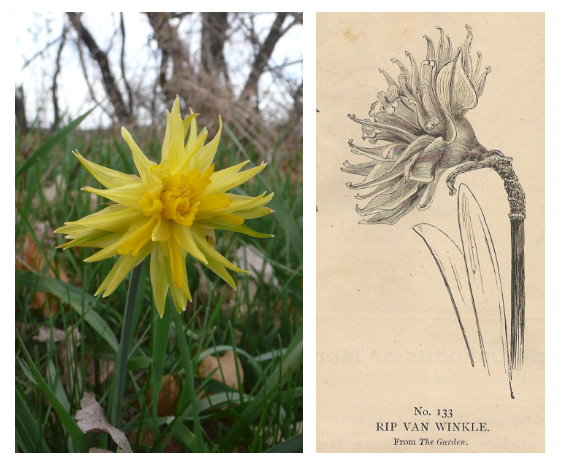
“A lot of the historic daffodils are hard to find and we don’t have photographic images. Even though they’re black and white drawings, these are so detailed, for identification purposes they’re very helpful.”
William Hartland inspired others to love and collect Ireland’s unique daffodils, including Fanny Currey (1848-1917) – a horticulturalist and successful watercolour painter. But she’s a story for another day! He clearly prospered from his – and his niece’s work. His home in Cork, Árd Cairn – shorn of its 10-acres of fields but still with some orchard – came up for sale 13 years ago and was featured in The Times. It is a grand-looking four-bed Georgian house. William died in September 1912, a wealthy man within his community.

Short career
Sadly, Gertrude’s career as an artist does not seem to have extended beyond those years working for her uncle. She married, had two children – a boy and a girl – and died in Drumcondra, near Dublin in 1954, aged 89.
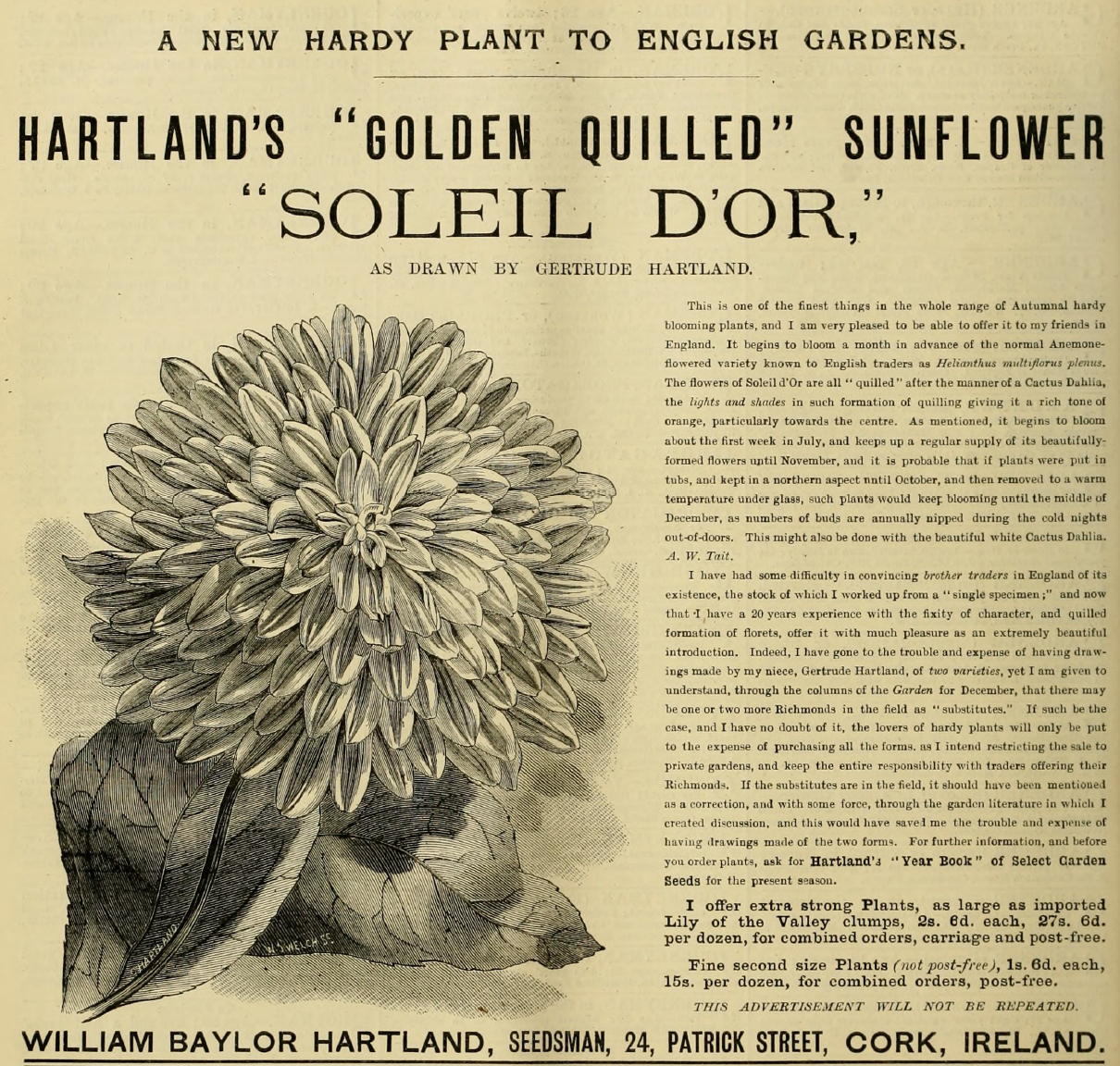
More than a century after she created these pictures, her uncle’s prophesy has come true. They are a reminder of Ireland’s “daffodil mania”. But also of a forgotten talent whose work is still appreciated by daffodil experts today.
Buying old daffodils
Visit: Old House Gardens for heirloom bulbs in the US
In the UK Thomas Etty Esq supplies Rip Van Winkle and many other heritage bulbs.
[1] W J Toal, Renaissance of the Daffodil in Ireland, newsletter of the Northern Ireland Daffodil Group June 1980.