
The quest for the blue rose
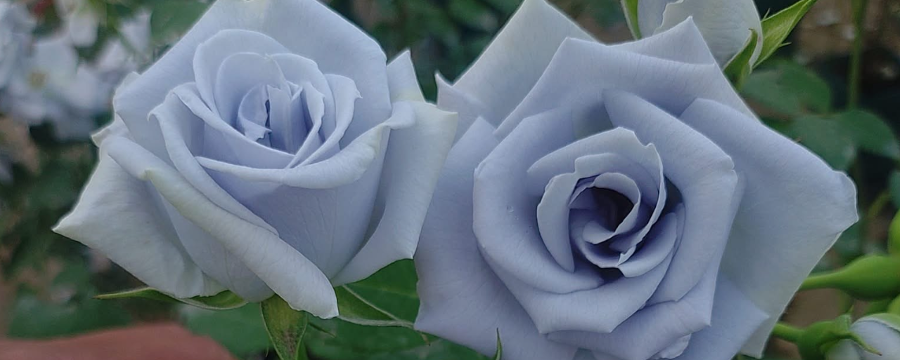
Rose are red, violets are blue, but what if roses could be blue, too? A Facebook message in 2025 from Japanese breeder Takunori Kimura raised just that question when it proclaimed: “It’s pretty safe to say that light blue roses are born.” Underneath was a photo taken in his glasshouse of four tea rose blooms. They were undeniably blue.
Thrilled messages began to spread through online rose groups around the world. Had Kimura really cracked the code that has eluded generations before? I set off for Japan, hoping to find out.
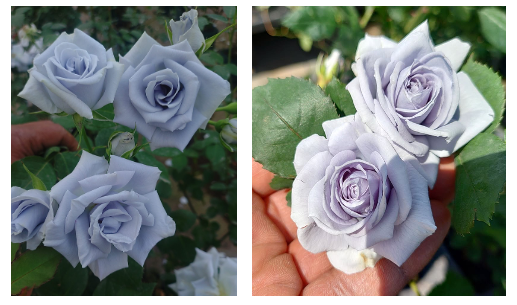
The quest for the blue rose goes back centuries. Since the twelfth century gardeners have been feeding dye through the stems of white roses to turn them blue – the same way blue roses sold at garages are coloured today.
Back in the 1920s the great Irish breeder Sam McGredy III claimed to have bred a proper, true-blue rose. His father was so horrified he had the whole stock uprooted and destroyed. Given the struggles that breeders and scientists have undergone since to match this “achievement”, we should perhaps take McGredy Jnr’s claim with a dose of scepticism.

The science of blue roses
There is good reason why our gardens do not have blue roses. And not just because we might share McGredy Snr’s aversion to them. The colour of roses is primarily determined by anthocyanin and carotenoid pigments. Anthocyanins – specifically, pelargonidin and cyanidin – give us the pink, red and violet hues; carotenoids the yellows and oranges. Roses do not have the gene to synthesise another important anthocyanin, delphinidin – which is the pigment that gives us the blue colour in plants like cornflowers and delphiniums. Even if they did, the rose bloom would need a more alkaline pH – rose petals are naturally acidic.
“By adjusting the cyanidin and pelargonidin levels through selective breeding, we can edge closer to the colour we want. But we will never get there,” says Thomas Proll, the acclaimed head breeder of the German Kordes roses company. “It’s not possible through conventional breeding.” It has not stopped him trying, though.
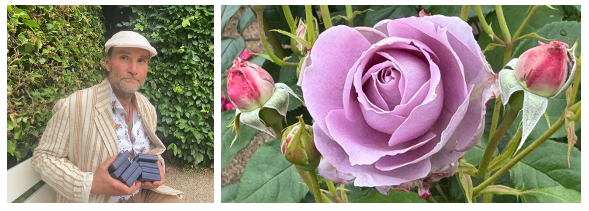
In 2010 Kordes released Proll’s ‘Novalis’ rose. It was named after the German poet known as the “the poet of the blue flower”. For Novalis blue flowers represented the romantically unattainable. The company is cautious about calling ‘Novalis’ “blue”. It describes it as “lavender”, others say “mauve” or “violet”. It is certainly beautiful.
Proll may be resigned to never breeding a blue rose, but it does not stop him showing his excitement about Kimura’s claim. “If it’s true,” he says, “it will be amazing.”
Blue roses in Japan
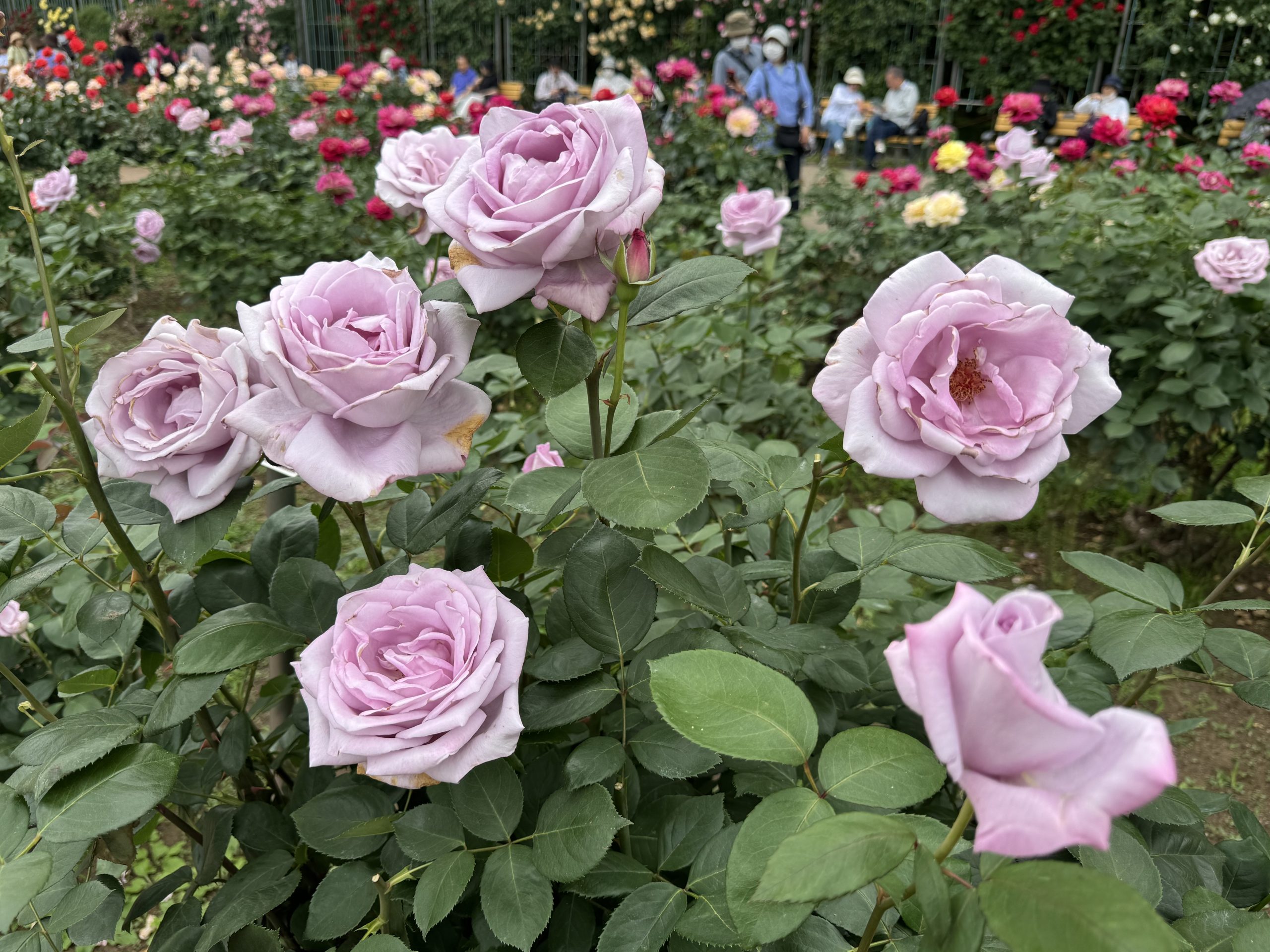
Visiting Japanese rose gardens, I quickly realised that gardeners there love these violet hues. Before long my phone was full of pictures of roses like ‘Blue Moon’ (1964), ‘Blue Nile’ (1975), ‘Blue Perfume’ (1978), ‘Blue River’ (1984), ‘Le Ciel Bleu’ (2012) and ‘Rainy Blue’ (2012) – none of them blue but all with appealing hints in that direction.

These “blue” roses have a distinctive smell, too, it seems. The Echigo Hillside Park rose garden, 160 miles north of Tokyo, has a collection of 2,400 roses chosen specially for their scent. At its centre are beds populated with roses representing seven distinct fragrance categories, like “tea”, “spicy” and “fruity”. The seventh is “blue”. It is described as “mellow sweetness”.


‘Applause’
One famous “blue” rose is missing from this and all other gardens – ‘Applause’. In 2004 the Suntory corporation, better known for its whisky, created a genetically modified rose that it described as “the world’s first true blue rose”.
The project had started 14 years earlier – that’s how long it took scientists to work out how to isolate blue genes from another plant – a pansy – and successfully introduce them into a rose using a soil bacterium.
And then began the regulatory battles. To grow these roses commercially, they had to get legal permits and prove that the new roses would not start spreading the introduced genes into the wider plant population. ‘Applause’ finally hit the cut flower market in 2009 – with stems selling at about £24 each, indicating why some experts believe the winner of this race can expect a £100 million reward. ‘Applause’ is still not widely available commercially.
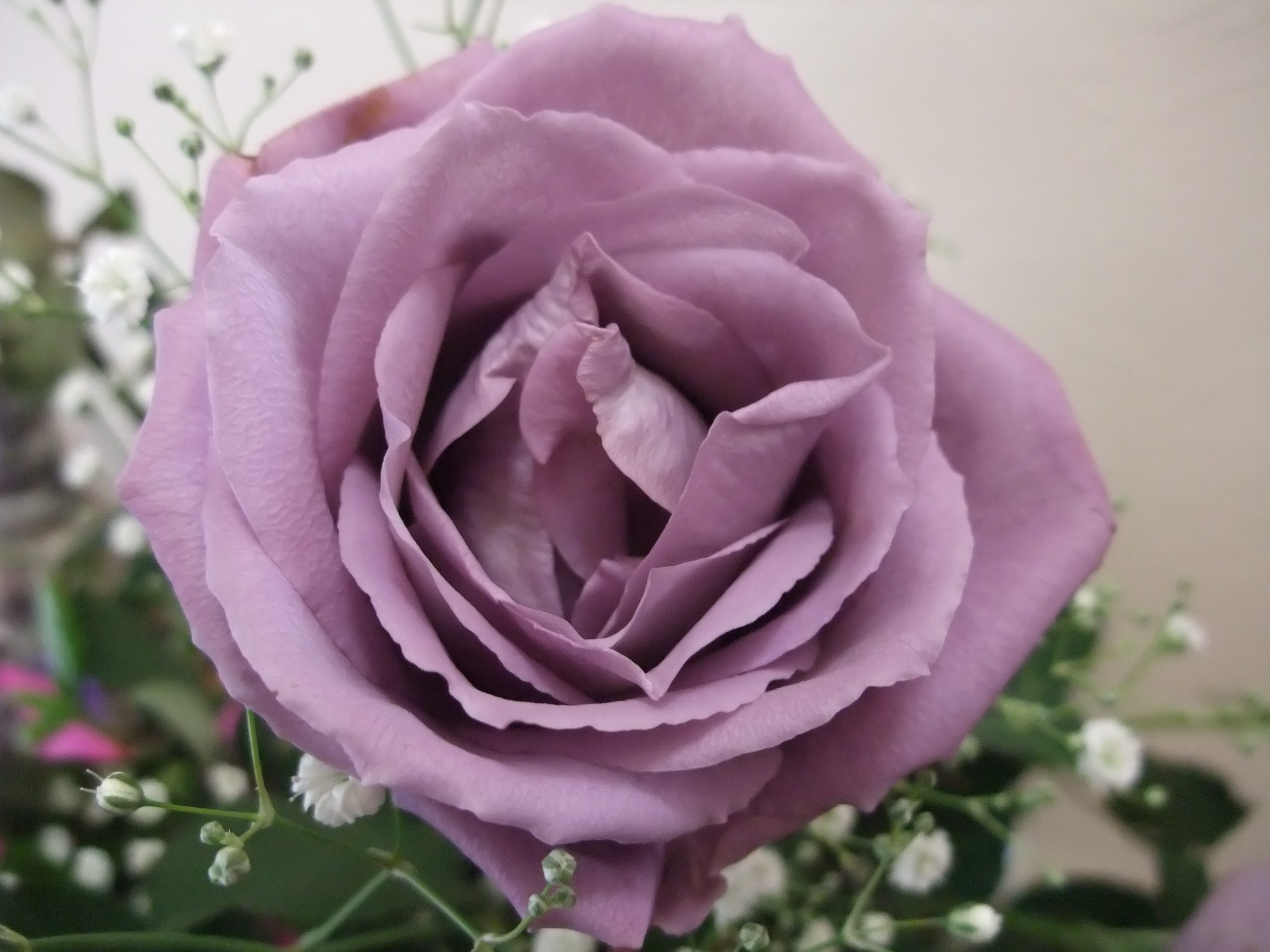
Is it blue? Most people would call it mid-purple. Suntory carries on its quest to find a rose that is as truly blue as Kimura’s new roses being shared on Facebook.
Meanwhile, Professor Yan Zhang, from Tianjin University, China, and scientists at the Chinese Academy of Sciences have joined battle. They are working on what they call a synthetic biology technique to engineer bacteria that can trigger the production of blue pigment in white roses.
In 2018 they claimed to have produced the world’s “first engineered blue rose”. But the colour is said to be short-lived and somewhat spotty.
Meeting Kimura
The first time I met Kimura, he was at a rose expo in Fukuyama. He had a stand for his company, Rosa Orientis. A long queue of women had formed for his autograph and to have photos taken with him.
When we got to meet properly the next day, I asked the 52-year-old: “Are you some sort of rose-breeding rock star?” He smiled diffidently and mumbled something about being on YouTube, making “rose school” videos. He has over 55,000 subscribers.
Through a translator, he told me: “There are no blue roses in nature, so I want to breed them. I don’t expect it to make me millions, I just like the challenge.”
“Did you doctor your picture on Facebook to make the roses look bluer?”
“No. I took them in the shade. In the shade it looks bluer; in sunlight less so. But even genetic modification has not been able to get a colour that blue.”
He explained: “I am not genetically modifying roses. My process is confidential, but I am working with wild roses and trying to get the best balance of pigments.” He uses a spectrophotometer to analyse the colours of petals to enable him to select the best parents to hybridise.
He added: “Every three years I find the roses become bluer. In the meantime, I keep trying to reduce redness or other colours.”

A few days later I visited his nursery, about 40 miles north of Tokyo. I was disappointed that the rose from his Facebook post had gone over. But Kimura allowed me into his glasshouse, where his first-year seedlings were kept. There were thousands in here and among them some that you would describe as white with a hint of blue.
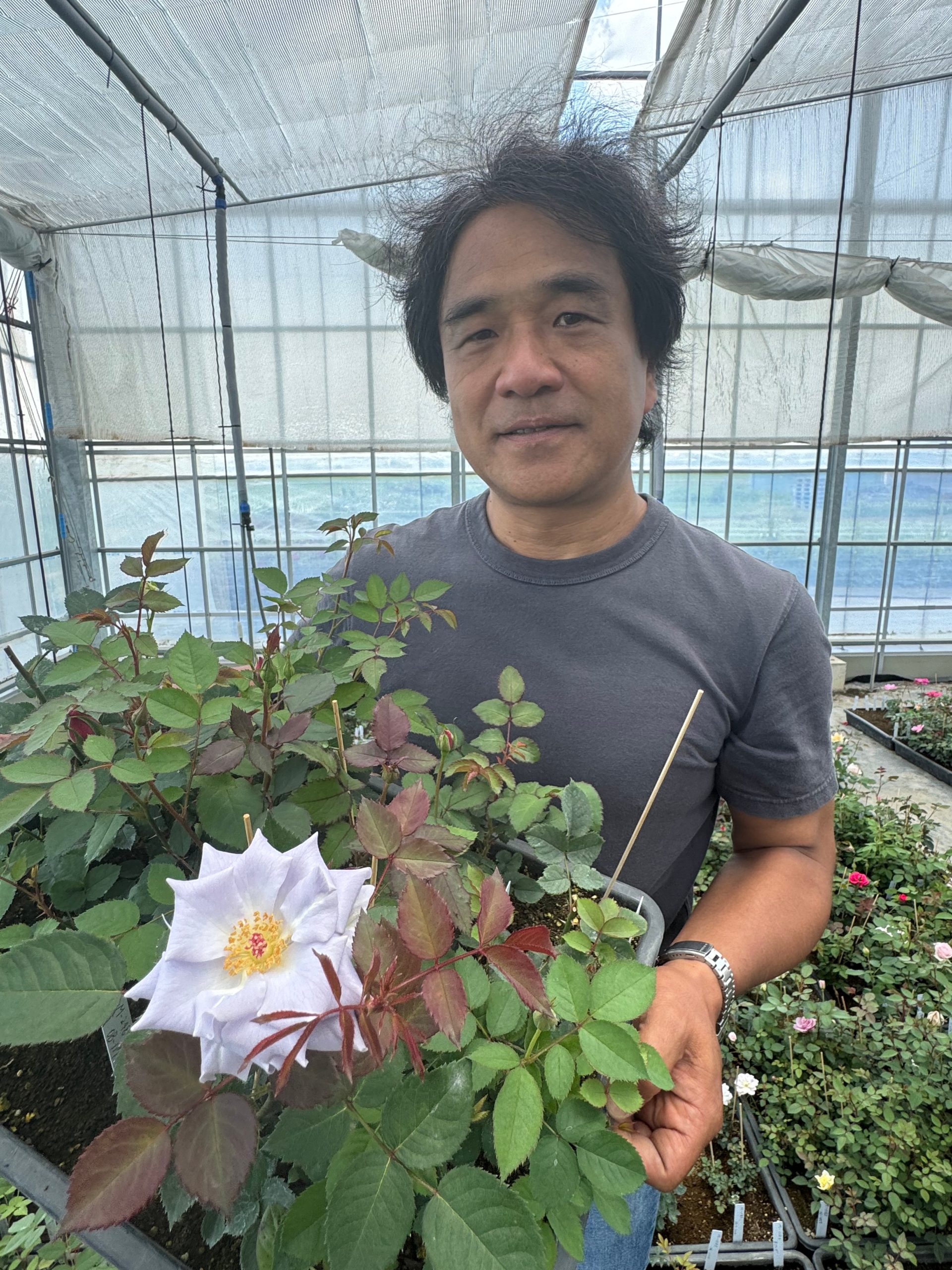
He picks the best of the new roses in this glasshouse to go into the fields outside for three years of trial testing, and only when they have shown they can survive without fungicides and perform well will they be deemed fit to bud up for sale. It’s a process that can take 10 years. Kimura’s new “blue” rose will only make it to our gardens if it survives this rigorous regime – only one in 10,000 does.
That was a year ago. Since then Facebook updates show he has inched another tiny step forward in his ambition to breed the blue rose.
China’s blue roses
But he is not alone on this quest. I write this in a fog of jet lag having just returned from a three-week trip to China. There I met another breeder producing roses with that lilac blue tint. China has the advantage of scale. Jiang Zhengzhi has been in business for just 18 years and already he has created over 200 roses. He sells 3 million a year from his nursery at Changshu northwest of Shanghai. His breeding glasses houses alone cover 40 acres.

His team, which includes genetic scientists, has collected nearly 100 species roses from around China to widen the gene pool they are working with. Most modern breeders in Europe have worked with just 10-15. In the breeding glasshouses I see a promising bluish rose. Jiang lifts the plant in its pot and shows me the leaves, with white spots of powdery mildew on them. “It gets disease too readily,” he says. “But I use it in the breeding for its colour.”
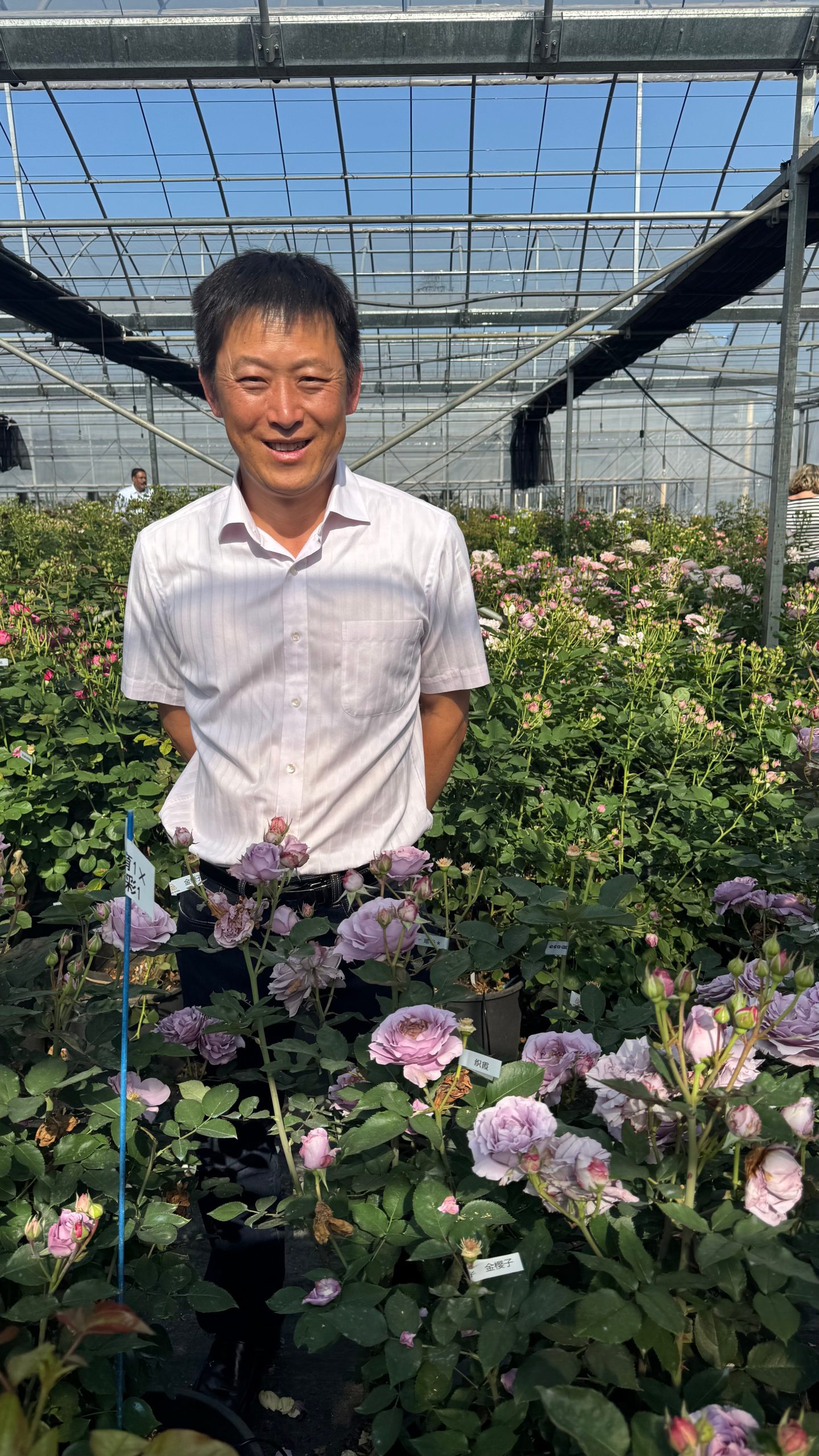
Jiang was first captivated by the idea of breeding blue roses 20 years ago, when he saw the ‘Blue Moon’ and ‘Blue Ribbon’ roses. “It was hard not to be excited about,” he later wrote. Once in business he began exploring other blue roses and found they all had the same problem – weak growth and poor disease resistance. He started by crossing various blue roses and quickly realised this wouldn’t work. So he began investigating the origins of the blue-purple gene. One rose at the grey end of the spectrum showed promise – ‘Grey Pearl’. Genetic analysis showed it came from the hybridisation of orange and pink roses. Jiang says: “This discovery was like a key, unlocking a new line of thought – why focus solely on blue-purple? He began crossing existing blue-purple varieties from Japan with more vigorous European roses of different colours, including David Austin’s ‘Abraham Darby’.

In his nursery garden, which showcases his roses, are several blue grey roses and in his catalogue I count at least 20. My favourite is ‘Ji Si’. It is bluish, but not blue. “There’s still a long way to go,” Jiang admits. “But we make continuous efforts. Maybe in the future better technology will help us.”
The future
Dr Inna Koval, a Ukrainian scientist who has studied the mechanisms of stress tolerance in roses, says: “You see in the search for a truly blue rose the limits of natural variation but also the limits of modern genetic engineering. The interaction between genetics and plant physiology is incredibly complex. Even if they can change some of the mechanism of the process, how stable will the colour be? Will the mechanism pass to the next generation? And will the plant be healthy? There are so many problems to overcome.”
And so the quest continues. The blue rose may be – as one scientist once put it – “a pigment of our imagination”. The best we may ever see is a healthier and slightly bluer version of the lilac, lavender, mauve roses we have today. But if these journeys have taught me anything it is how great that colour looks. If we ever do get a true-blue rose, I am not sure I will like it. I have, however, very much fallen for those heading in that direction.
An earlier version of this piece first appeared in Hortus Magazine.