
Happy rhubarb day

Happy rhubarb day. I am delighted to have discovered the French decimal calendar and a tool for converting our boring Gregorian calendar into one more entertaining to gardeners.
In 1792, a French revolutionary committee (only a committee could come up with this), decided to throw out the boring Gregorian calendar used in the rest of Europe. They associated it with the royalist regime. They particularly opposed saints’ days and biblical holidays. Instead, they decided to reinvent time decimally. Ladies, and gentlemen, let modern secular reason prevail. Welcome to the 10-day week (where each day has 20 hours).
You may already be seeing problems ahead, but let’s first explore this exciting new way of measuring time and its joys for gardeners, before getting all cynical.

The days were called Primidi, Duodi, Tridi, Quartidi, Quintidi, Sextidi, Septidi, Octidi, Nonidi and Decadi. Decadi was a day of rest.
Each day of the year celebrated something from nature. Usually it was plants, flowers of minerals. Allotment gardeners will be pleased to see carrots, parsnips, apples, pears, tomatoes and rhubarb all dutifully honoured. Quintidi days were named after an animal. Decadi days after an agricultural tool – a bit harsh to have to remember your plough or wheelbarrow on your day of rest, perhaps. Then there were the months.
Decimal calendar
There were still 12 months – each 30 days long. The year started in Autumn with Vendémiaire, celebrating the grape harvest. It was followed by Brumaire, the month of fog and mist, and then Frimaire, the month of frost.
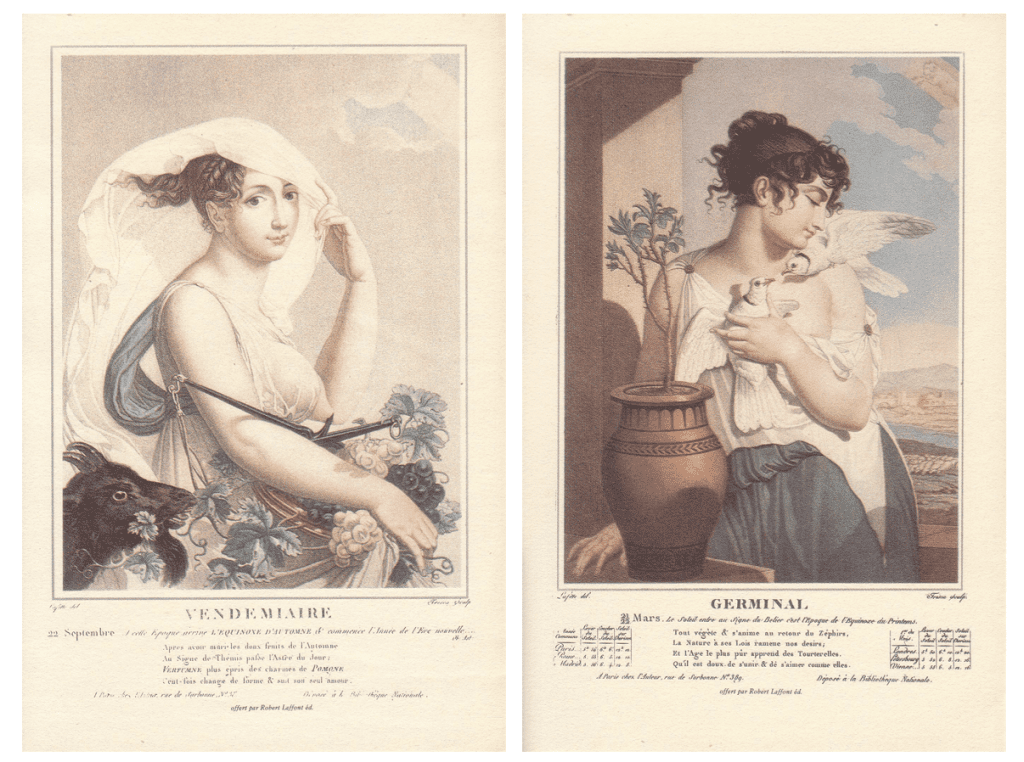
Winter began on 21 Dec (if you insist on being old school) with Nivôse – the month of snow. Pluviôse (rain) and Ventôse (wind) followed.
That got us to 21 March, the first day of Spring, and the month of Germinal, celebrating germination. Floréal (illustrated at the top of this blog) – flower – came next. And then Prairial – meadow.
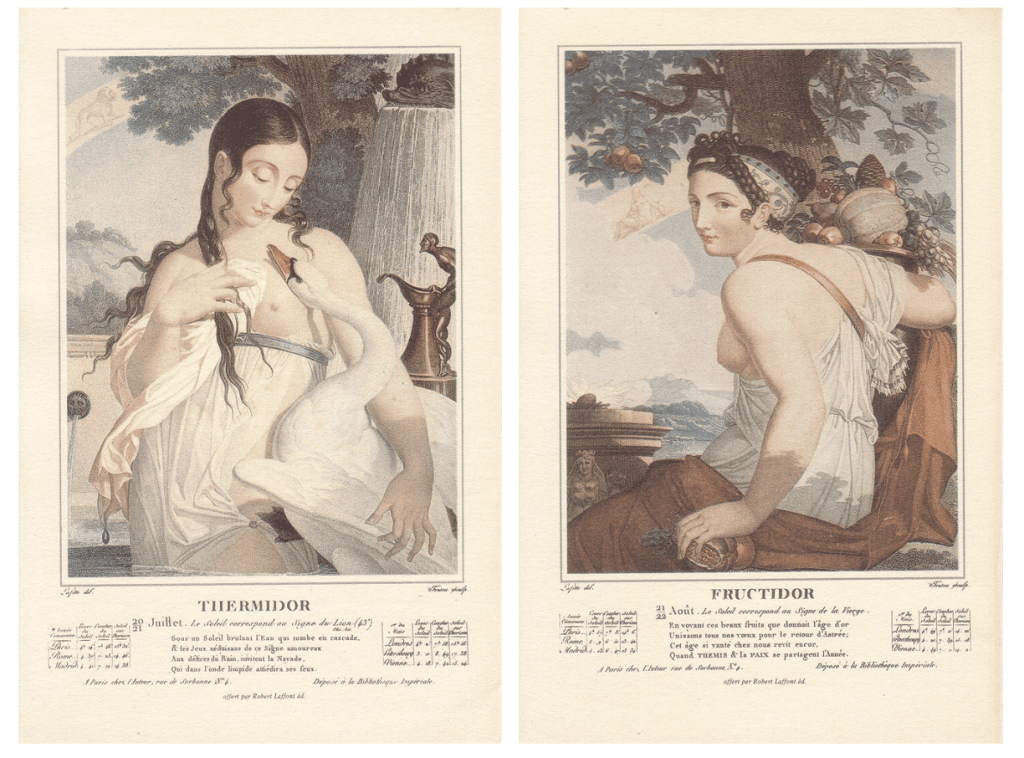
Our final quarter, Summer, started with Messidor – harvest. Then Thermidor – heat. And, finally, we had Fructidor – fruit.
A contemporary English wag suggested we rename our months in Britain, too. He proposed: Spring – Showery, Flowery, Bowery; Summer – Hoppy, Poppy, Croppy; Autumn – Wheezy, Sneezy, Freezy; and Winter – Slippy, Drippy and Nippy.
Églantine
Poet and playwright Fabre d’Églantine (1750-1794) devised the more serious French month names and the rural calendar. (He wasn’t born Églantine. He took that name to commemorate receiving a silver wild rose from a poetic academy.)

It wasn’t entirely perfect! You may have spotted that you’ve gone from a day of rest every seven days to one every 10. But needs must in the cause of liberté, égalité and fraternité.
Then there’s the minor issue that if each month has only 30 days you are five days short each ‘tropical’ year (six in a leap year). The revolutionaries called these ‘sansculottides’ (complimentary days) and dealt with them at the end of the year in a series of holidays that compensated a little, perhaps, for your missed Sundays.
The revolutionaries dedicated these ‘sansculottides’ to good republican values, like virtue, talent, labour, opinion, rewards and – in a leap year – revolution.
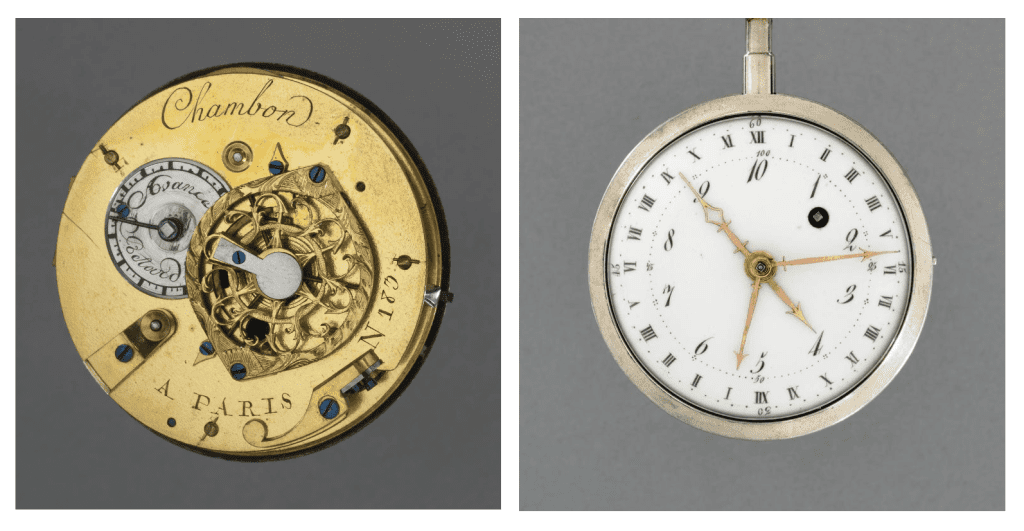
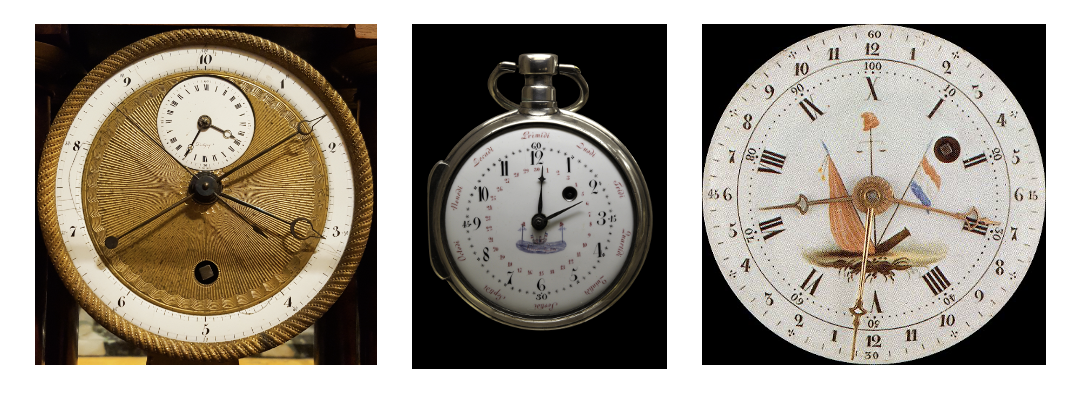
The new decimal time was great for watchmakers!
Celebrating nature
I am posting this on Primidi, 11 Floreal. If you want to work out the day when reading, then use this handy converter. And then scroll down here to the gallery to work out which plant or gardening tool to celebrate (or translate from this image).
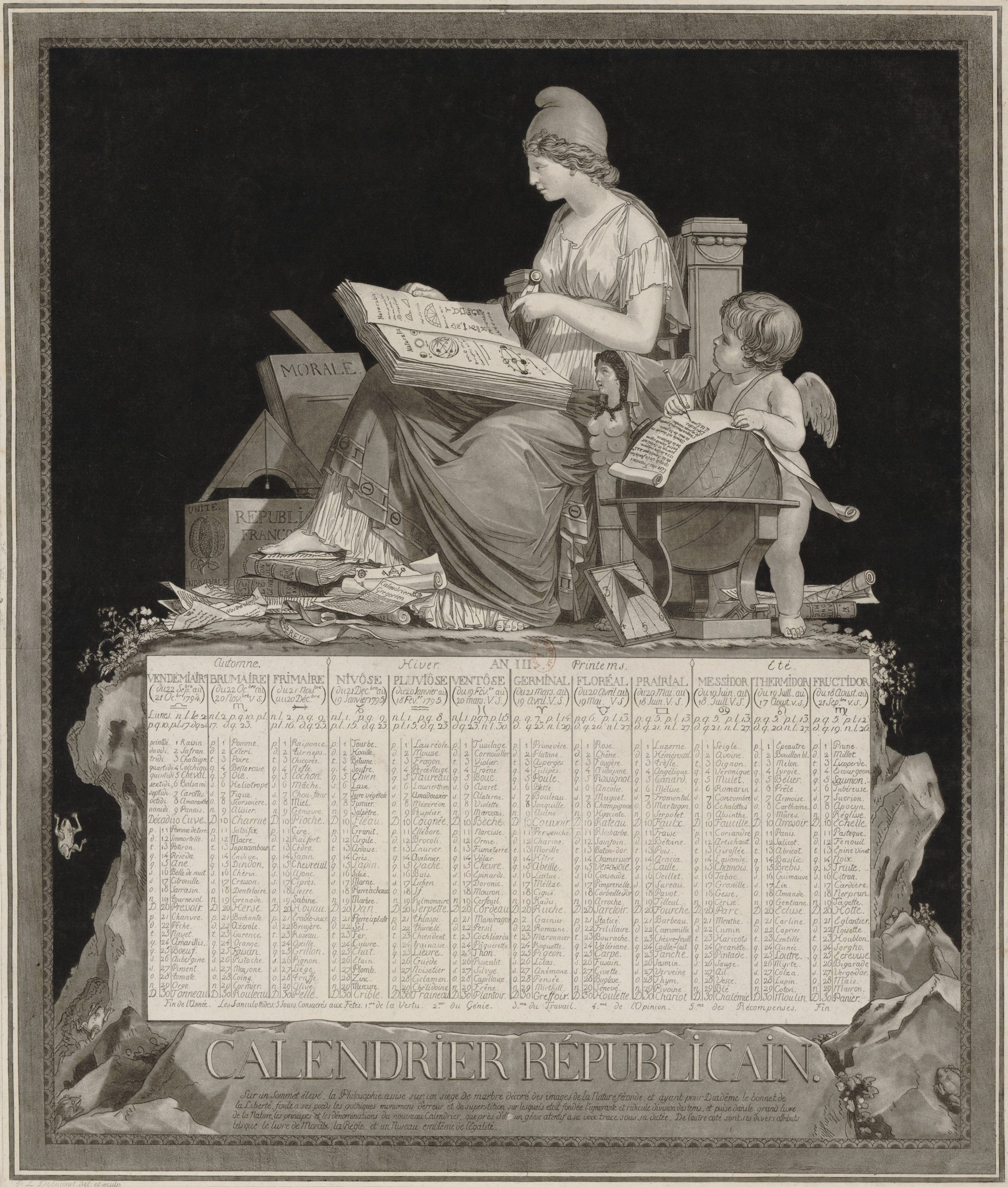
The calendar was used from 22 September 1792 to 1 January 1806, when Napoleon abolished it. It got a new burst of life again for 18 days of the Paris Commune of 1871.
Églantine didn’t live to see the demise of his calendar. He got caught in the middle of revolutionary political intrigue and the fall of Robespierre and went to the guillotine on 5th April 1794 – the 16th day of Germinal… or lettuce day. A fitting end for a man so committed to a ‘cos’!