Murray Radka – the rose rescuer rescued by roses
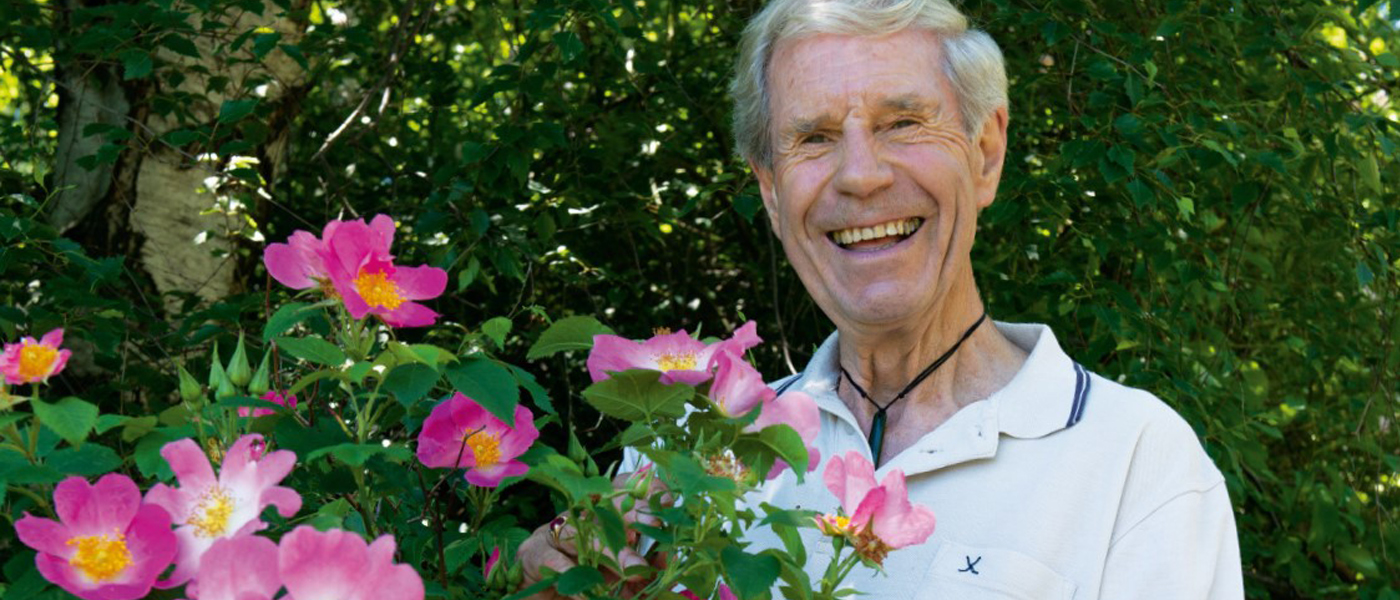
Bio security controls make importing plants to New Zealand expensive and difficult, so replacing historic roses as they die and as nurseries stop growing them has become almost impossible. History teacher Murray Radka could see his country’s rich old rose heritage disappearing. He decided to act.
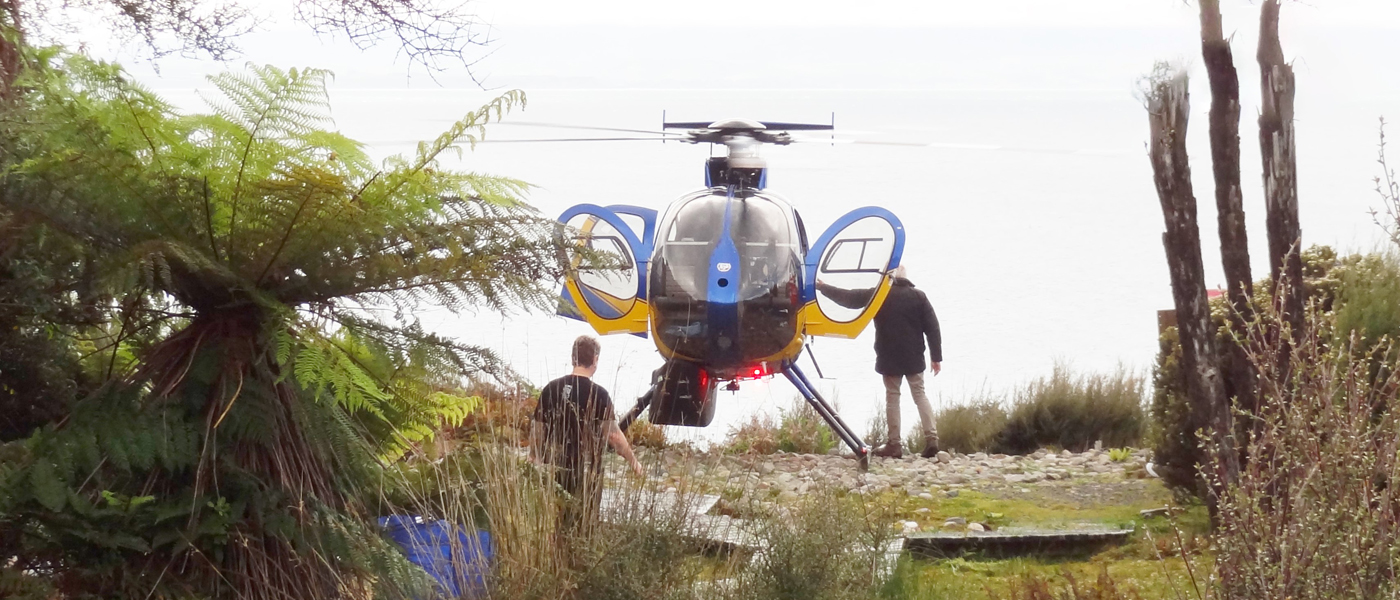
 Over the course of a lifetime, he has created a sanctuary for 2,000 old roses in his 10-acre garden at Brandy Hill in Alexandra, Otago. He has criss-crossed the country, haunting cemeteries, digging around the sites of old gold miners’ homes. Once he was even helicoptered in to an abandoned logging settlement to snatch cuttings.
To many in New Zealand he is known as the “rose rescuer”, but after the tragic death of son Craig in 2000, it was the roses that rescued him.
I first heard Murray tell his story at a heritage rose conference in Brussels in 2023. Many of us were in tears afterwards. A dream was sown that day – to visit Brandy Hill. In December I made it.
What I found was inspiring, moving, but also worrying. Now 77 and with serious health issues, Murray faces one final challenge – to save this remarkable collection and a lifetime’s work for posterity.
History of Brandy Hill
Brandy Hill takes its name from an incident that happened there back in the 19th century when a wagon carrying liquor overturned. “Many of the barrels splintered,” says Murray, smiling. “Local people couldn’t bear all that waste.” In the party that followed, one particular barrel of brandy was remembered so fondly that the site became known thereafter as “Brandy Hill”. Murray, a history teacher by training, naturally kept the name when he and his wife, Noeleen, bought the site in 1974.
They were newly married and strapped for cash, but they had fallen in love – first with each other and now with this barren hillside. They hoped to turn it into woodland. Murray’s father said it w
as a nonsensical idea. The elderly farmers on neighbouring plots would look over the wire fence, shake their heads at the couple’s stupidity, and growl that it was only good for rabbits and sheep.
But Murray’s stubborn resilience – a quality that would serve him well later – meant he wasn’t giving in. Working evenings, weekends and holidays, he and Noeleen built their own home. Painstakingly watering the saplings, defying the weather and the terrain, they began to establish their wood. And then he discovered roses.
Smitten
Coming home after a gruelling counselling session with a suicidal pupil one day, Murray needed some time to himself. He stepped into a book shop, where he picked up a copy of New Zealand rosarian Trevor Griffiths’ My World of Old Roses. “I didn’t know who he was, and I knew nothing about old roses,” he says. “I opened the book to a page that had the Damask rose, ‘Botzaris’, on it and was just astonished at its beauty.”

He learned about Trevor’s garden at Timaru on the east coast and persuaded Noeleen that this might be a nice place for the family to go camping. You get the feeling this has been a recurring theme of their marriage – the apparently innocent suggestion of an outing or holiday that suddenly turns into a rose adventure.
Murray was smitten by what he saw in Timaru. He and Trevor became friends. Murray started buying old roses – “Only old roses,” he insists. “New ones just don’t look right here.” He decided first to buy all the Gallicas he could find. Before long it was the Albas and Moss roses, too. And then every old rose still available. Others were shrinking their collections as he was building his. Staff at botanical gardens and parks were swapping the charming older roses for (perhaps) healthier, repeat-flowering modern ones. Nurseries stopped growing them.
Settler roses
The rose rescuing began in the early ’80s. Through friends he learned about the old settler roses to be found over the province that were disappearing with property development. For Murray this wasn’t just about collecting roses but the stories that came with them. One particular tale he likes is that of Jane McKnight. In 1870 she endured the 80-day voyage from Scotland to New Zealand. She had with her three children, aged six, four and two, a few clothes and two cuttings of the yellow Rosa hemisphaerica ‘Flore Pleno’ and the white rambler ‘Félicité et Perpétue’.
She was joining her husband, James, who had come ahead earlier and built a small stone house for them. Jane and James went on to raise nine more children in that two-room hut. From its door she could watch not just them growing but also her roses. Each bloom carried in its scent precious memories of a distant home and loved ones left behind.

Growing
As the years went on, Murray watched his own family grow – four sons, Brian, Craig, Glenn and Grant. His adopted rose family expanded, too. He stopped counting, hoping Noeleen wouldn’t notice as year by year more rose survivors found refuge on the grassy slopes, between the trees. To help him monitor and record them better, he began growing his roses in groups, by their classification.
Such was the scale of the operation that he was unable to weed and cut the grass around them. He first sprayed the grass with weedkiller and the roses with fungicides. When he realised they were not flourishing, he decided to let them grow in grass, untreated. They thrived.
Tragedy
The knock on the door came at nine o’clock in the evening. It was 11th November 2000. Two police officers stood on the porch. “Because of my job as a student counsellor, I thought it was to do with one of my pupils. But they told me a young man had died in a car accident in the North Island. They thought it was Craig. With that, our life changed forever.
“Craig loved Brandy Hill as much as I do. We brought him home and had a funeral like no other in Alexandra. The local Māori community held and supported us. The ceremony was breathtaking, but when it was over everyone moved on. I was angry. The world was black and ugly to me. I would have been happy to die right there and then myself. But I couldn’t do this to my family.
“I had to find beauty in my life again. I found it in the garden. Saving and propagating roses, seeing the roots of a cutting coming through and then the bloom – that’s where I rediscovered joy. People say: ‘Murray, you’ve saved the roses.’ But no – they saved me.”
Pilgrimage
At the beginning of December last year – early summer in New Zealand – I finally got to see Brandy Hill. It was one of the gardens to be visited by delegates during a conference held by the New Zealand Rose Society in Cromwell. Murray was to be the keynote speaker. But even as I was packing for the flight, emails were landing in my inbox from the other side of the world warning that he was seriously unwell. He had had surgery for bowel cancer; he had lung disease and an aneurysm at the base of the brain. He might be too frail to speak. The garden would not look as beautiful as it could.
It was an enormous relief to see Murray, with his ceremonial Māori stick, climb out of his car to greet us and give a traditional blessing to the event. He was looking frail but determined. Again, he told the story of Brandy Hill. Again, the tissues were passed round. And then we climbed aboard the coach to visit.
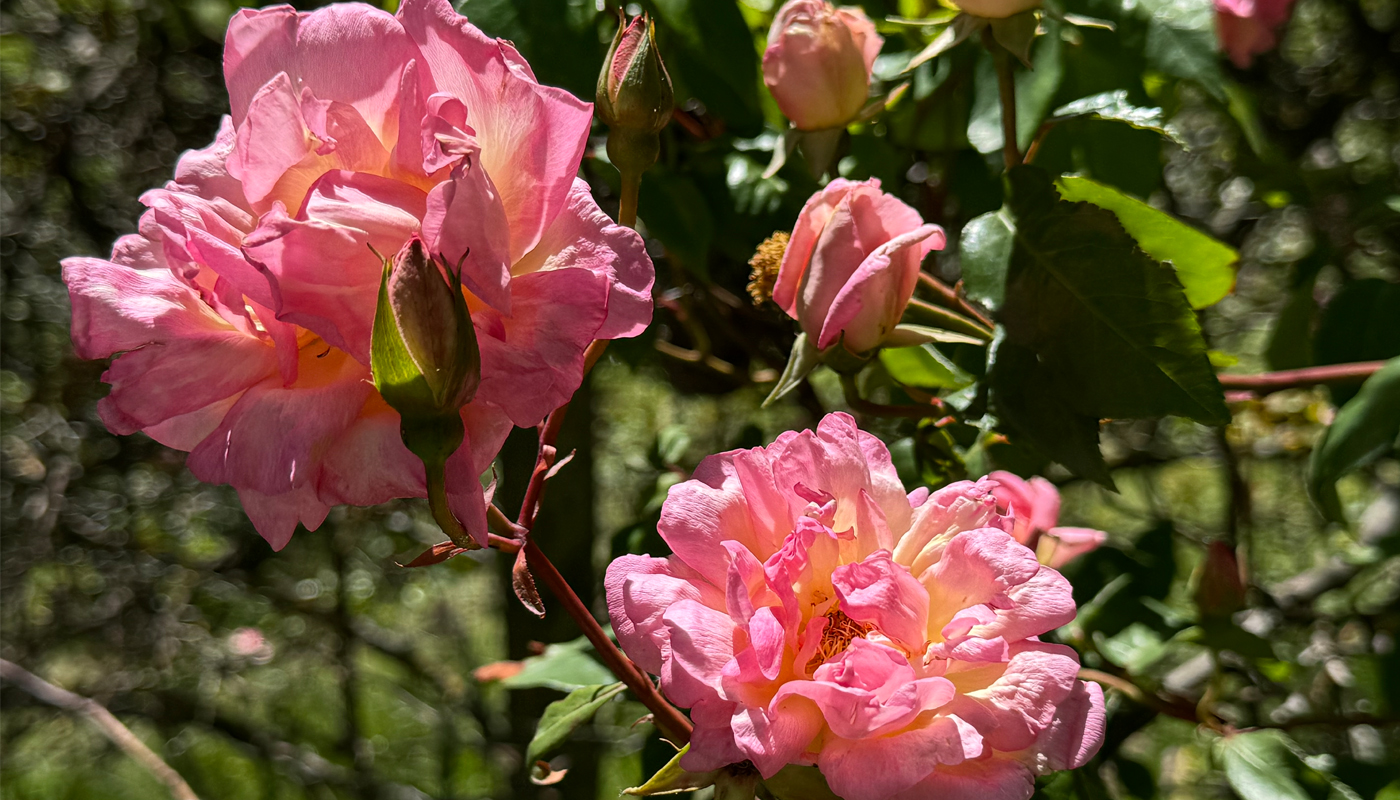
As others moved from garden to garden, I stayed put, taking my time to clamber up the steep slopes among the roses, absorbing the views. There was the tough pink Gallica he discovered among the weeds at the edge of Gimmerburn cemetery; the delicate white species rose found in an abandoned garden on an ancient Māori sacred site; and the deep cerise ruffled petals of the mystery rose spotted by a local pilot and rescued from a derelict cottage near the Manuherekia river. Many of these roses cannot be identified. They may be unique internationally – rare survivors from the 19thcentury and their sports.

Rescue
The beauty that inspired Murray to fight his way through grief was there. But few of the roses still had their labels, and many were looking as fragile as Murray himself. He was upset about the state of the garden. “I feel my roses have been neglected. I’ve been distracted by trying to rescue stragglers elsewhere and more recently by my health. I need to spend my time now making sure that I bring them back to health and that I propagate anything that looks vulnerable.”
He has begun an 18-month programme of work on paths and support structures. Friends are helping to photograph, re-label and catalogue each plant. And an enthusiastic young propagator who has taken over a rose nursery has offered to bud roses for him.

It is important work. This is now a significant national – maybe international – collection. Its value is highlighted by the fact that Murray has been approached by Timaru Council to help restore 200 lost roses in the garden of the late Trevor Griffiths – the rosarian who first sparked his passion.
The future
Murray’s sons have promised to do what they can to save Brandy Hill for the long term, but they have their own busy lives and their own financial needs. It is the same challenge that faces many historic collections: how do they live beyond their first curator? These roses have shown remarkable resilience over the years – like the man who rescued them. Heritage rose lovers around the world are hoping he can find the time and wherewithal to ensure they survive without him.
This article first appeared in the gardening journal, Hortus.
You can see Murray tell his own story here:
Banner image: Murray with Rosa ‘Complicata’