
Queen Mary of Teck – the Rose Queen
I was really disappointed. I’d seen a collection of 19 rose annuals on eBay for £99 from the 1930s and 40s. They were in red covers with gold leaf and looked quite splendid. I’d assumed they were American as the UK Rose Society annuals are green. I was to get a surprise.
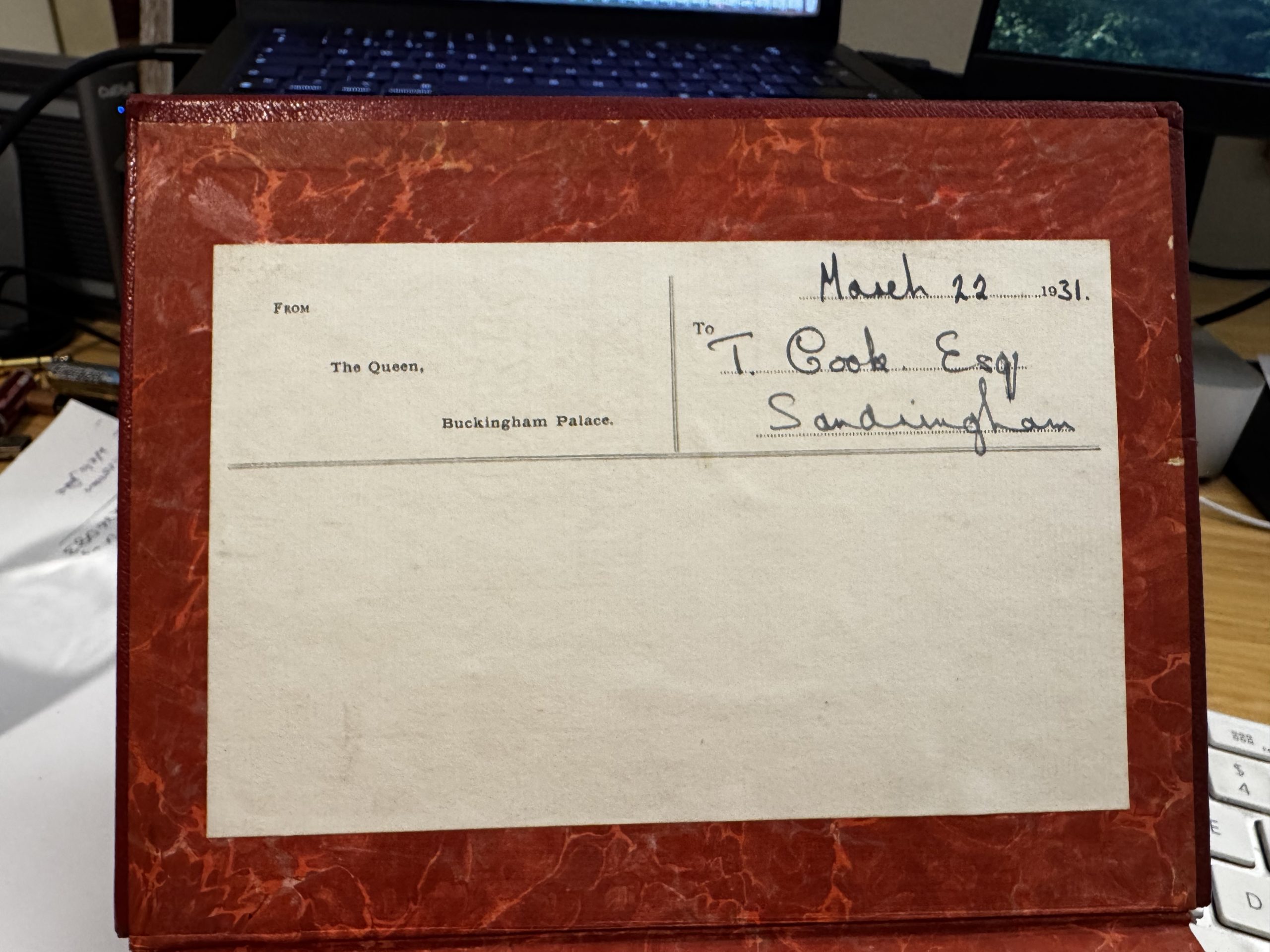
A few days later the books arrived. They were UK annuals. But I’ve already got nearly a full set of those. Feeling a bit cross with myself for wasting money, I opened the cover of the 1931 edition. It had a piece of paper stuck in it. Typing to the left indicated it was a gift from the Queen at Buckingham Palace. The recipient was T. Cook Esq at Sandringham.

Thomas Cook
Some modest digging soon uncovered that T. Cook was Thomas Cook, the head gardener at the Sandringham royal estate. I even found a picture of him with his dog in the Queen’s scrapbook.

Thomas first appears in a register of electors there in 1909, living in the gardener’s house and as Head Gardener in the census of 1911.
He was born in Ireland in 1869. So too old to fight in the First World War, unlike many of his colleagues. It’s estimated that 77 men – butlers, gardeners, gamekeepers, grooms and farmhands – from the Sandringham estate were killed in that war. Most disappeared mysteriously during the Gallipoli campaign in 1915 – a story told here.

Cook was still head gardener in 1937. When he died in 1947 he was buried in the parish church at Sandringham – a loyal servant to the royal household.
And what of the Queen? The book he received was from Queen Mary, wife of King George V (and great-grandmother of the current king). It appears to be one of a small print run made in special red binding specially for her and, perhaps, other distinguished vice-patrons.

Queen Mary
Born and raised in London, Mary was the daughter of a German prince, Francis, Duke of Teck and Princess Mary Adelaide of Cambridge, a granddaughter of King George III.
She was first destined to marry Prince Albert Victor, second in line to the throne. When he died at Sandringham in a flu pandemic in 1891, she became engaged to his brother, George, who became King George V in 1910.

Public domain
George’s mother, Queen Alexandra of Denmark, wife of King Edward VII, was patroness of the National Rose Society at the time and remained so till her death in 1925. At this point, Queen Mary took her place. Queen Mary went on to have strong associations with the rose.
Queen Mary Gardens Regents Park
The rose garden at Regents Park was named after her. The site was originally leased from the Crown by the Royal Botanic Society and often used for exhibitions by the Rose Society. When the lease expired in 1932 the site was cleared and made into open parkland. But in the wake of the Wall St Crash and the Great Depression, the government wanted to support the British rose industry. They felt that a fine display garden in the heart of London would suit the bill.
The British Rose Grower’s Association – at the suggestion of the Empire Marketing Board – gifted over a thousand roses. It became known as Queen Mary’s Garden and is still today one of the finest rose gardens in Britain, with around 12,000 roses in 85 single-variety beds.
“Lady of the Roses”
There are many stories about Queen Mary, but one stands out – the suggestion that during the 1930s she was the well-dressed older woman who would regularly visit a London Catholic church when it was quiet and otherwise empty. The mystery woman would be accompanied by several other people, hovering in the background. Each time, she would kneel in prayer at the altar of Mary. And as she left would hand a priest some money and, pointing to the statue of Mary, whisper: “Get flowers; get roses!” She became known as the “Lady of the Roses”.
Mary was not a Catholic, but she and King George had visited the Pope at the Vatican in 1923. Afterwards, it was reported, the Pope had all the roses cut in the Vatican garden and made into beautiful bouquets for her.
Theft!
Before the Second World War, Mary was a regular visitor to the Rose Society’s annual Summer Show at Chelsea. Apparently, she was known to help herself to rose arrangements in the exhibitors’ precious baskets. But she compensated for this in 1935, when she presented a silver cup to the Rose Society to mark the couple’s silver jubilee. The Queen Mary’s Cup was for 14 vases of cut flowers.
Queen Mary remained patron till her death in 1953, at the age of 85. She was buried in the nave of St George’s Chapel, Windsor Castle, a wreath of yellow and white roses on her coffin.

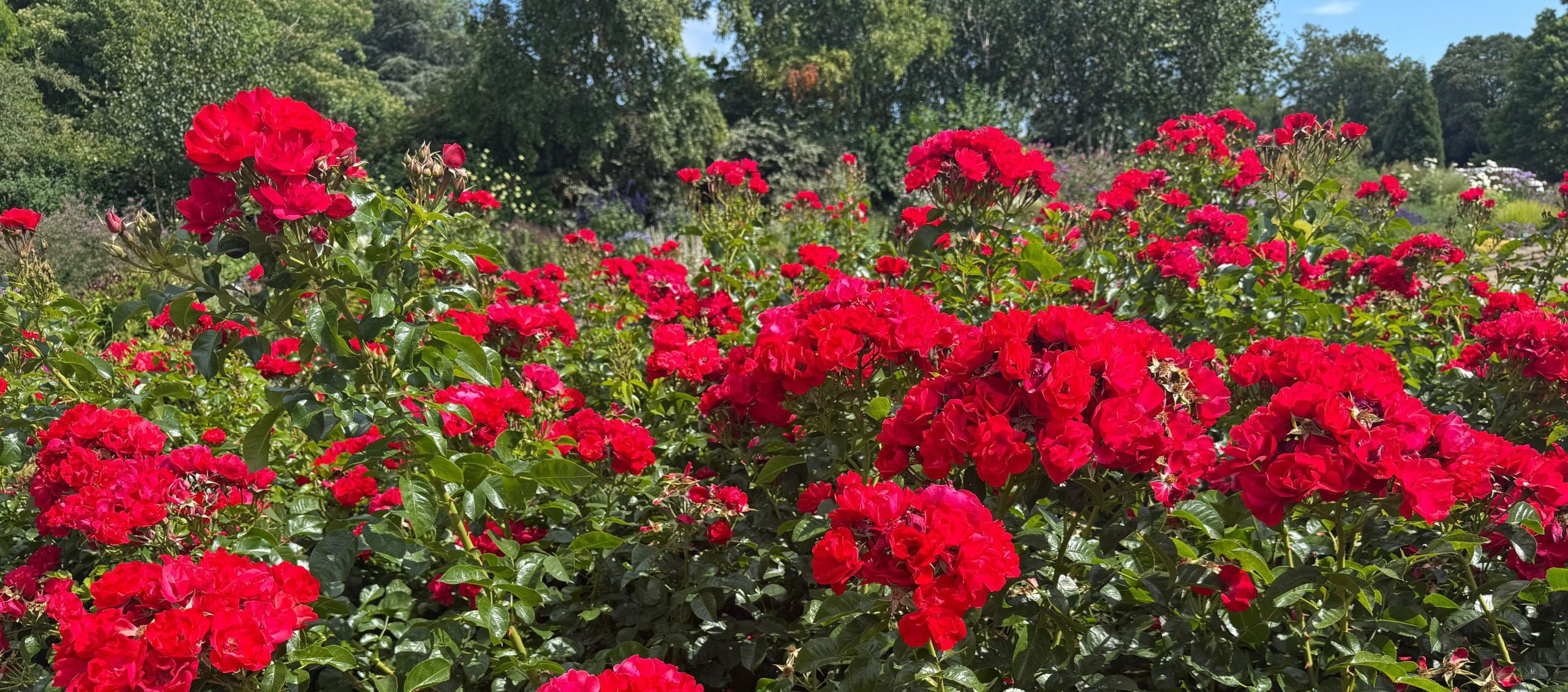
Opening image: Queen Mary’s Rose Garden in London. Copyright: Martin Stott, the Storyteller Garden.